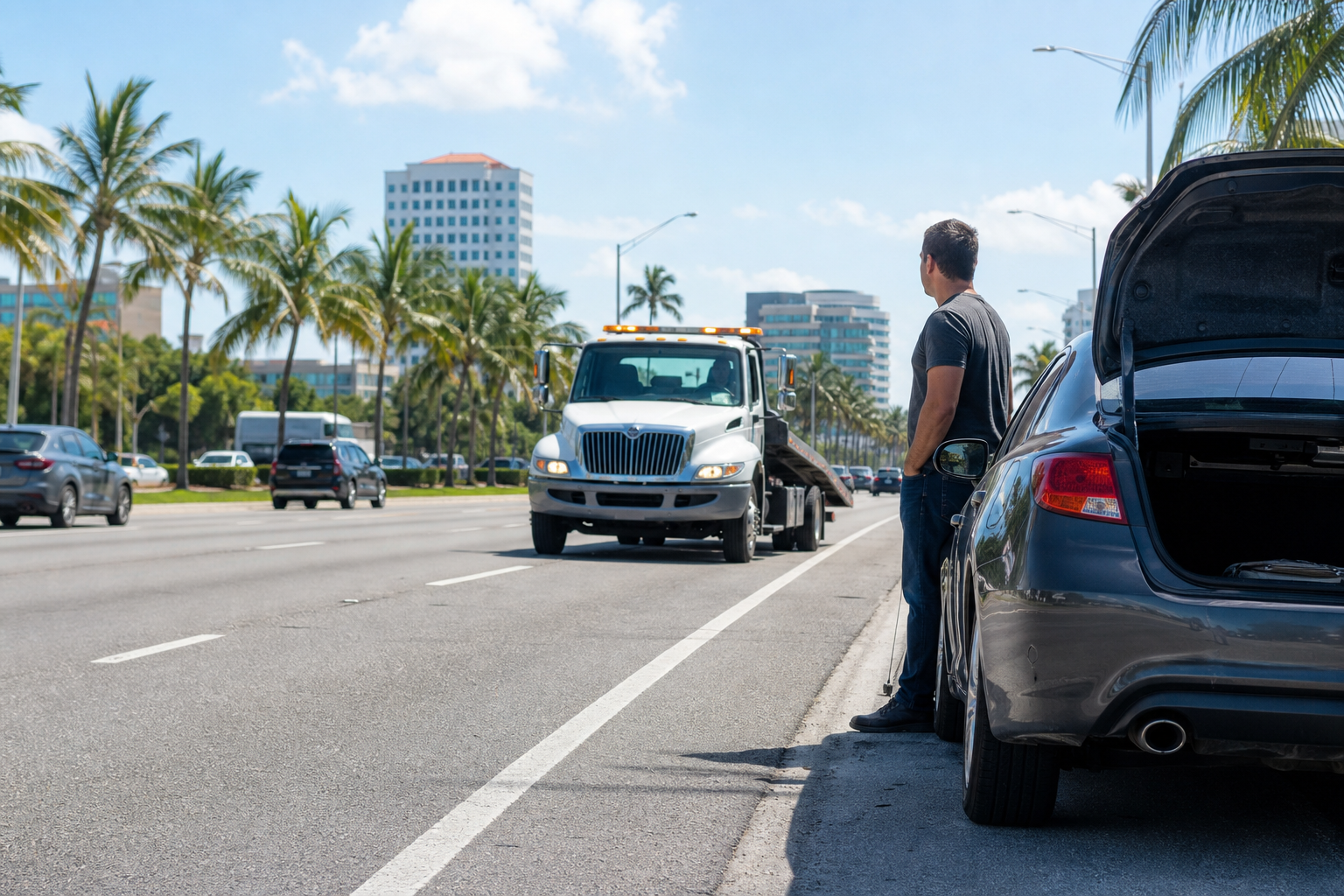
A breakdown on a busy road can become stressful quickly, especially when traffic is moving fast or there is little room between your vehicle and active lanes. In West Palm Beach, that can mean dealing with heavy traffic near I-95, Florida's Turnpike, Okeechobee Boulevard, Southern Boulevard, Australian Avenue, or US-1. Your first goal is not diagnosing the problem. It is getting yourself and your passengers out of immediate danger and arranging the right kind of help.
Do This First: A 60-Second Breakdown Plan
- Turn on your hazard lights immediately.
- Steer toward the shoulder, a parking lot, a side street, or another safe area if the vehicle can still move safely.
- Stop as far from moving traffic as possible, keeping the wheels pointed straight.
- Put the vehicle in park, set the parking brake, and assess whether it is safer to stay inside or exit away from traffic.
- Call for emergency help if there is an injury, smoke, fire, a fuel leak, or an immediate roadway hazard.
- Request roadside assistance or towing once you are in the safest available location.
Make the Roadway Safer Before You Make Calls
Where your vehicle stops determines what you should do next. A car in a parking lot with a dead battery presents a very different situation from a car stopped near a travel lane on I-95. Treat speed, visibility, weather, and shoulder width as part of the emergency.
If You Can Move the Vehicle
If the engine is running and the vehicle responds normally enough to steer and brake, move only as far as needed to clear traffic. A nearby gas station, shopping center entrance, side street, or paved shoulder is generally safer than remaining in a live lane. Do not continue driving a vehicle that is overheating, smoking, leaking fluid, making severe mechanical noises, or showing a warning that makes the vehicle unsafe to operate.
On roads such as Okeechobee Boulevard or Southern Boulevard, a center turn lane may look like a refuge, but traffic can enter it from either direction. Use it only to get out of an active lane when there is no safer immediate option, then arrange help promptly.
If You Cannot Move the Vehicle
Keep your hazard lights on and stay focused on visibility. If your vehicle is stopped in or very close to a traffic lane, do not stand beside the driver-side door or attempt to inspect the vehicle from the roadway. Call for help and clearly explain that the vehicle is blocking or close to traffic.
Whether to remain inside or exit depends on the location. Inside a vehicle may offer more protection when there is no safe place to walk to, particularly beside fast-moving traffic. If you can leave safely from the side away from traffic and reach a protected area well clear of the road, move there with passengers. Never cross active lanes to reach the other side of a highway or divided road.
Match the Problem to the Right Type of Help
A clear description of the problem helps a dispatcher send appropriate assistance and prevents wasted time. You do not need to know the exact mechanical cause. Describe what happened, what the vehicle is doing now, and whether it can be moved safely.
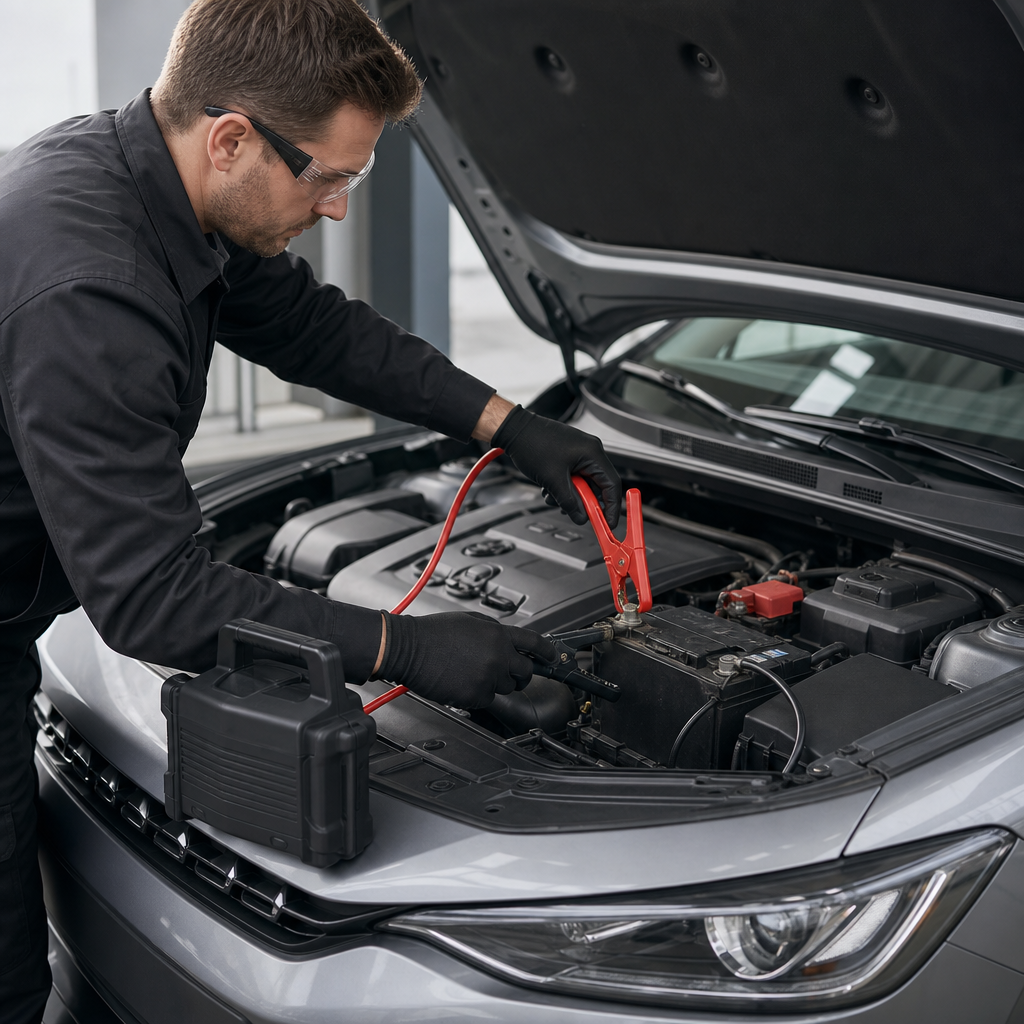
- Dead battery or no-start condition: If the vehicle is parked safely and the likely issue is a weak battery, a jump start service">jump start service may be the right first step.
- Vehicle will not drive safely: If the engine stalls, the transmission will not engage, the steering feels abnormal, a tire is damaged, or warning signs make driving risky, request towing.
- Collision-related damage or major fluid leak: Do not try to drive the vehicle away. Tell the dispatcher about visible damage, leaking fluid, or whether the wheels can roll.
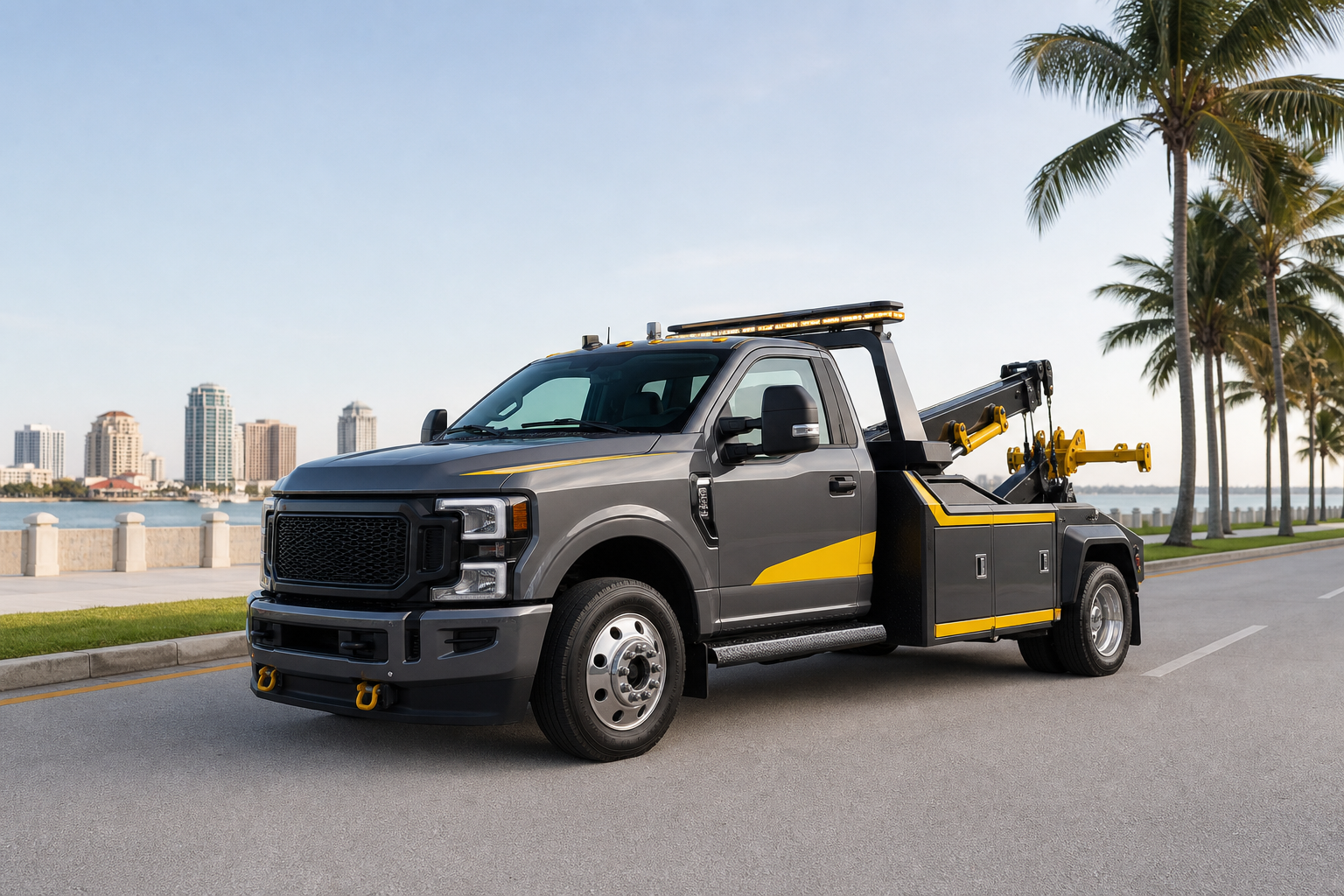
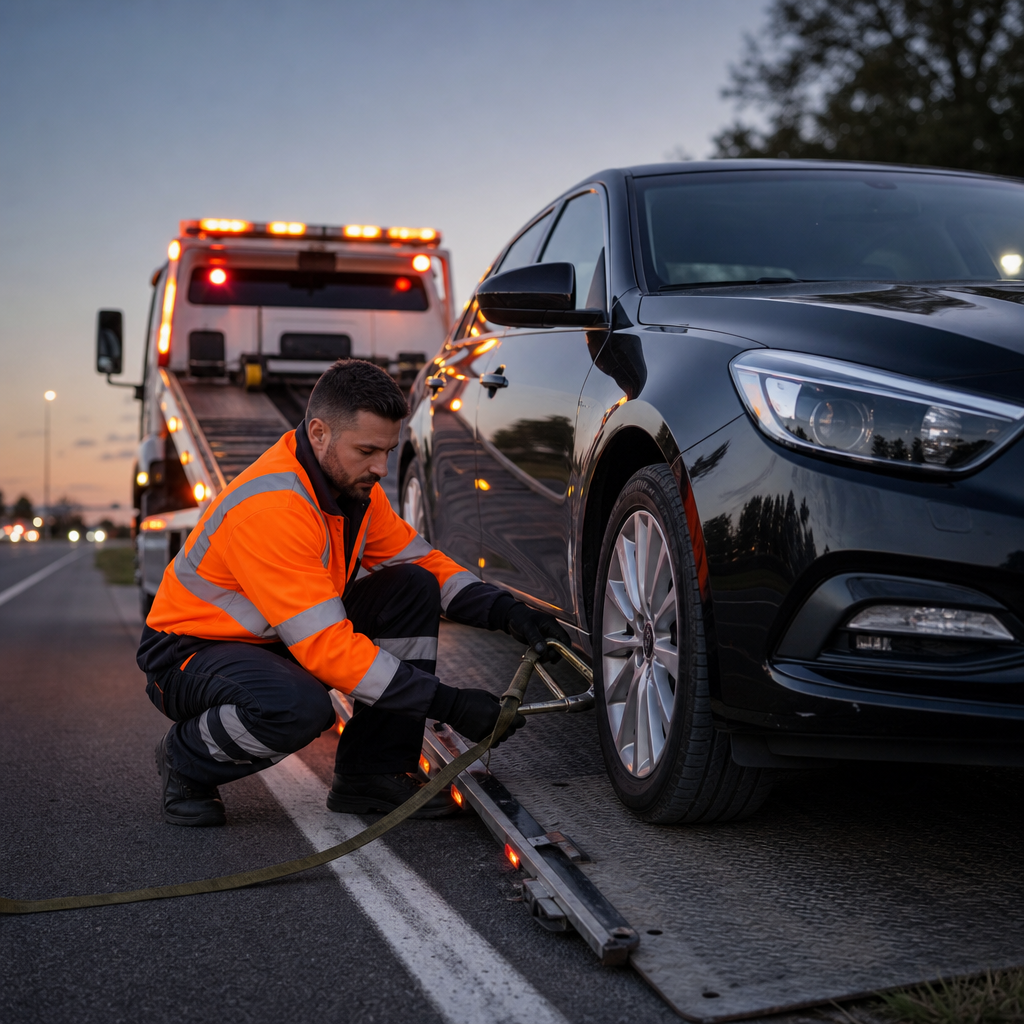
- Low-clearance, luxury, all-wheel-drive, or severely disabled vehicle: Ask whether flatbed towing">flatbed towing is appropriate. A flatbed can be useful when the vehicle should not be pulled with its wheels on the road.
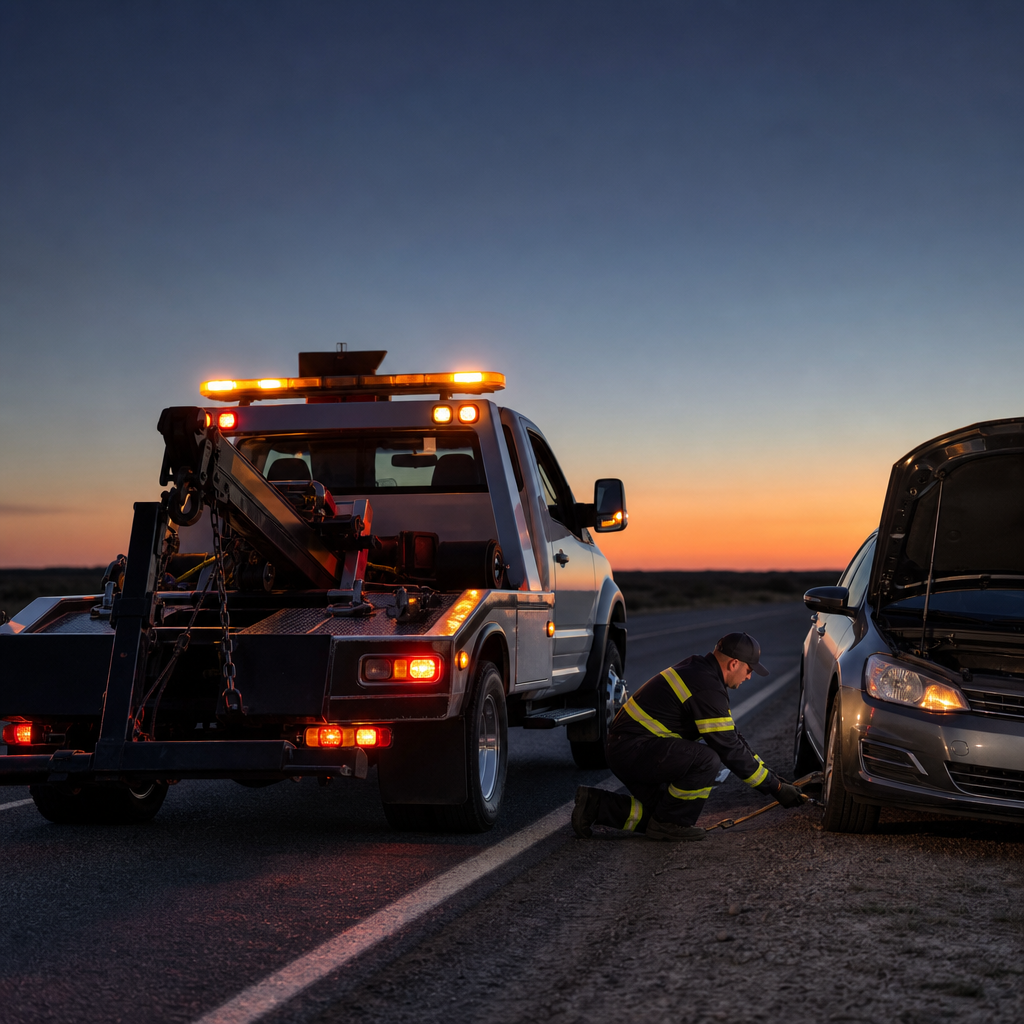
- Unsafe roadside location: When the vehicle is near high-speed traffic, in a lane, or on a narrow shoulder, emphasize the location and safety concern when requesting emergency towing">emergency towing.
What to Tell the Towing Dispatcher
Precise location details are often more useful than a general statement such as “I am on I-95” or “I am near downtown.” Before calling, look for road signs, cross streets, landmarks, or your phone map location.
Your Call Checklist
- Your exact road, direction of travel, and nearest cross street, exit, or visible landmark.
- Whether you are on a shoulder, in a parking lot, in a turn lane, or blocking a travel lane.
- Your vehicle's year, make, model, color, and license plate if requested.
- The issue in plain language: “won't start,” “overheating,” “front wheel damaged,” or “stalled and cannot move.”
- Whether the vehicle is accessible to a tow truck and whether the wheels roll and steer.
- Your destination, if known, such as your home, a repair facility, or another safe location.
- A callback number and any detail that will help identify you, such as being near a specific storefront or underpass.
If you are on I-95 or Florida's Turnpike, include the direction you were traveling. “Northbound near Okeechobee Boulevard” is much more actionable than naming the road alone. If you are unsure, use a map app to share your location, but do not spend time navigating a phone if traffic conditions require your full attention.
Waiting Safely for Roadside Assistance
After help is on the way, avoid turning the wait into a second emergency. Keep your phone charged if possible, monitor your surroundings, and remain visible without placing yourself next to traffic.
- Keep hazard lights on while the vehicle is stopped near traffic.
- Do not accept a ride or vehicle work from an unverified person who approaches unexpectedly.
- Keep valuables out of sight and have identification, vehicle registration, and payment information available only when needed.
- If it is dark, use your interior light sparingly so you can remain aware of approaching vehicles.
- Tell the towing professional if your location changes, such as moving from a roadway shoulder into a nearby lot.
- Before the tow begins, remove needed personal items from the vehicle if it is safe to do so.
West Palm Beach rain can reduce visibility and make shoulders slick in a short time. During heavy rain, do not attempt roadside troubleshooting near moving vehicles. A tow is often the safer choice when you cannot confidently get the vehicle to a protected location.
When Calling for a Tow Is the Better Decision
Drivers sometimes hesitate because a vehicle starts again or seems capable of moving a short distance. But a brief restart does not necessarily mean the problem is resolved. Request 24-hour towing">24-hour towing when driving onward could leave you stranded in a worse location or cause additional damage.
A tow is a sensible choice when:
- The vehicle repeatedly stalls, overheats, loses power, or will not shift normally.
- You have a warning condition that makes the vehicle feel unsafe to drive.
- The vehicle is stopped on a fast or congested road with limited safe space.
- You are traveling with children, older passengers, or anyone who cannot safely wait near traffic.
- It is nighttime, heavy rain is reducing visibility, or you are unfamiliar with the area.
- You cannot identify a safe nearby destination to drive to without risking another breakdown.
Before the Tow Truck Arrives
Once you have arranged towing, take a few minutes to prepare. Confirm the destination address, make sure you have keys available, and note any vehicle details the operator should know, such as a low bumper, locked steering wheel, damage, or a vehicle that cannot roll. Ask what identification or access is needed when the truck arrives.
If you must leave the vehicle at a safe location before towing is completed, only do so after confirming the arrangement with the towing provider. Do not leave the keys unsecured or assume a tow truck can access a locked vehicle without prior coordination.
Frequently Asked Questions
Should I stay in my car after breaking down on a busy road?
It depends on the roadway and whether there is a protected place to wait. If exiting would put you near moving traffic, remaining inside with seat belts fastened may be safer. If you can safely exit from the side away from traffic and reach a protected area well off the road, that may be the better option.
What location details should I provide in West Palm Beach?
Give the road name, direction of travel, nearest cross street, exit, landmark, or shopping center. On major roads, identify whether you are northbound, southbound, eastbound, or westbound and whether you are on a shoulder, ramp, or in a travel lane.
Can I drive a short distance if my car starts again?
Only if the vehicle is operating normally and you can safely reach a protected location. Do not continue if it is overheating, leaking fluid, stalling, steering poorly, making severe noises, or displaying signs that it may fail again in traffic.
When is flatbed towing a good option?
Flatbed towing can be a good choice when the vehicle is damaged, cannot roll safely, has wheel or steering concerns, has very low clearance, or should not be towed with its wheels on the roadway. Tell the dispatcher about the vehicle's condition so the appropriate equipment can be considered.