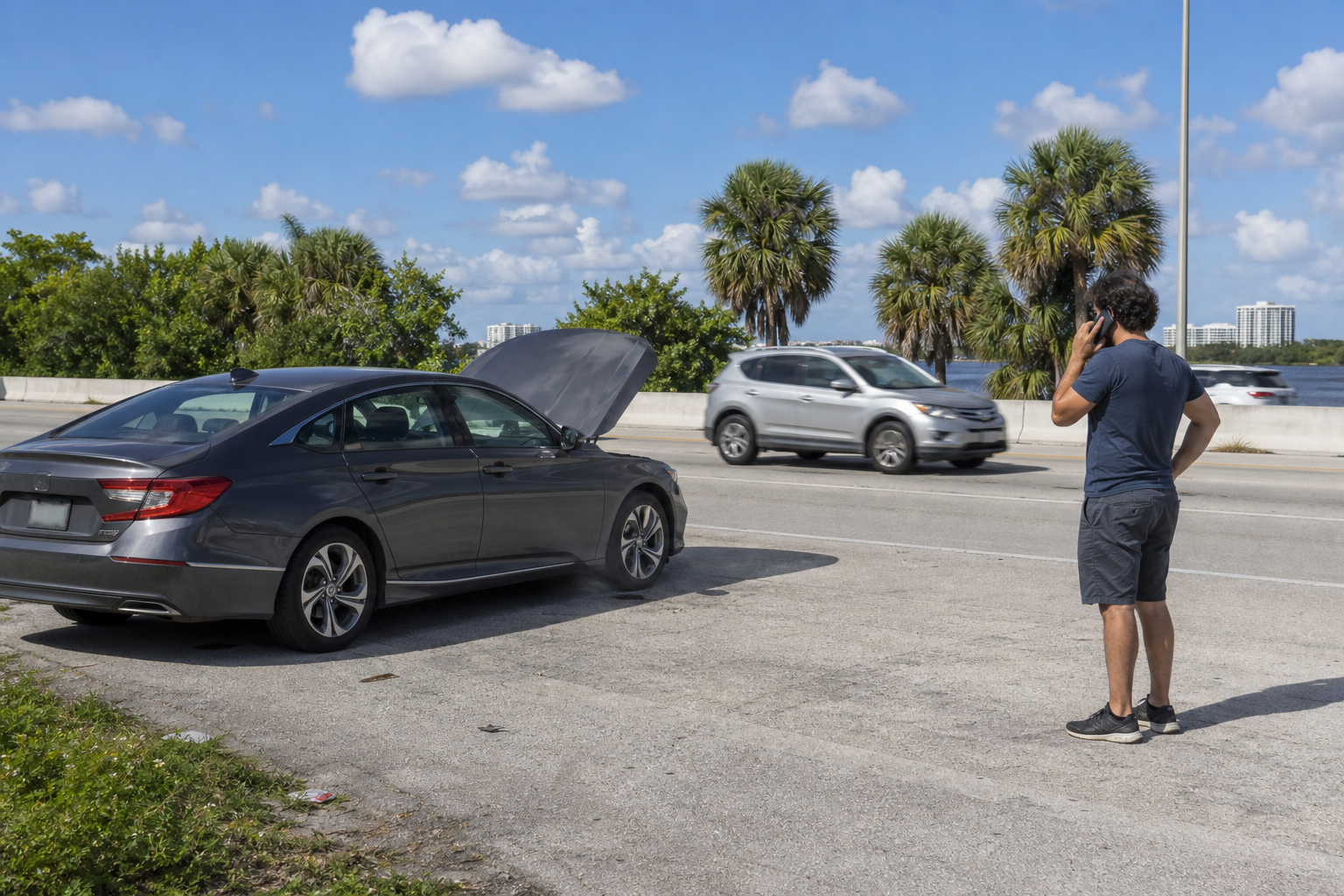
Decision rule: If a burning smell is strong, getting stronger, comes with smoke, warning lights, unusual steering or braking, or appears after you see fluid leaking, pull over as soon as you can do so safely and request help. A faint odor that disappears may not require an immediate tow, but a smell you cannot confidently identify is not a reason to keep driving through traffic.
In West Palm Beach, Palm Beach, Florida, traffic exposure and roadside visibility should shape every decision. Do not stop abruptly in a travel lane to investigate an odor. Your first goal is a safe, visible stopping place; your second is keeping yourself away from a possible vehicle hazard.
Quick answer: pull over now or monitor briefly?
A burning odor can come from overheated material, a fluid reaching a hot surface, an electrical problem, or friction from a moving vehicle component. You do not need to diagnose the source at the roadside. Use the intensity of the smell and the vehicle's behavior to choose the safer path.
- Pull over now: The smell is sharp, acrid, smoky, like melting plastic or hot wiring; you see smoke; a warning light appears; the vehicle pulls, shakes, loses power, brakes feel different, or the temperature gauge rises.
- Stop soon and request towing: The smell persists after you park, returns repeatedly, seems tied to braking or acceleration, or you notice fresh fluid beneath the vehicle.
- Monitor only if conditions are calm: The odor was faint, brief, completely gone, and there are no warning lights, smoke, leaks, handling changes, or changes in braking. If it returns, treat it as a pull-over situation.
Immediate action: Turn off anything nonessential, signal early, move toward a safe visible place, and avoid opening the hood if you see smoke. If the smell is strong or the vehicle feels abnormal, call for emergency towing rather than trying to continue.
What to do—and what not to do—when you smell burning
| Do | Don't |
|---|---|
| Signal early and reduce speed smoothly while looking for a safe stopping area. | Do not brake hard, make sudden lane changes, or stop in a traffic lane unless the vehicle cannot move safely. |
| Park where approaching drivers can see your vehicle from a distance. | Do not pull onto soft ground, a narrow shoulder, or an area that leaves you close to moving traffic if a safer option is available. |
| Turn off the engine after stopping if smoke, overheating, or a strong odor is present. | Do not restart repeatedly to “see if it goes away.” |
| Keep occupants away from traffic and away from the vehicle if smoke increases. | Do not touch hot wheels, brakes, underbody parts, or leaked fluid. |
| Tell the towing dispatcher what you smelled, saw, and felt while driving. | Do not assume a burning smell is harmless because the vehicle still moves. |
Scenario playbook: from first smell to safe help
1. Notice the smell without trying to solve it while moving
Keep both hands available for driving and scan for changes that raise the urgency: smoke from the hood or wheel area, a hot or electrical smell, a dashboard warning, reduced power, vibration, a dragging sensation, or altered brake feel. A smell that resembles burning rubber, oil, plastic, or electrical insulation can have different causes, but the roadside response is similar: create time and space to stop safely.
If you are in dense traffic, avoid the urge to immediately inspect the vehicle. Signal, keep a predictable path, and choose the first reasonably safe location that gives you visibility and separation from moving vehicles.
2. Choose a stopping place based on visibility, not convenience
For a West Palm Beach driver, the safest available location may be a parking area, a wide paved edge, or another place where the vehicle is visible and you can remain away from traffic. If you must stop near the roadway, position the vehicle as far from moving traffic as practical without creating a second hazard.
Once stopped, shift into park, set the parking brake if it operates normally, and turn on hazard flashers. If there is active smoke, a worsening smell, or an overheating indication, turn off the engine. Do not open the hood simply to look for the source; smoke or heat can make that unsafe.
3. Make a quick no-touch assessment
From a safe position, look—not touch—for obvious warning signs:
- Smoke from the hood, beneath the vehicle, or around a wheel
- A puddle, drip, or fresh trail of fluid
- A strong odor that continues after the engine is off
- A tire that looks unusually low or damaged
- A warning message or warning light that appeared during the drive
If smoke is present, move people away from the vehicle and away from traffic. Do not lean underneath the vehicle, reach into the engine area, or pour water on hot components. If there is a fire or immediate danger, contact emergency services first.
4. Match the symptom to the help you request
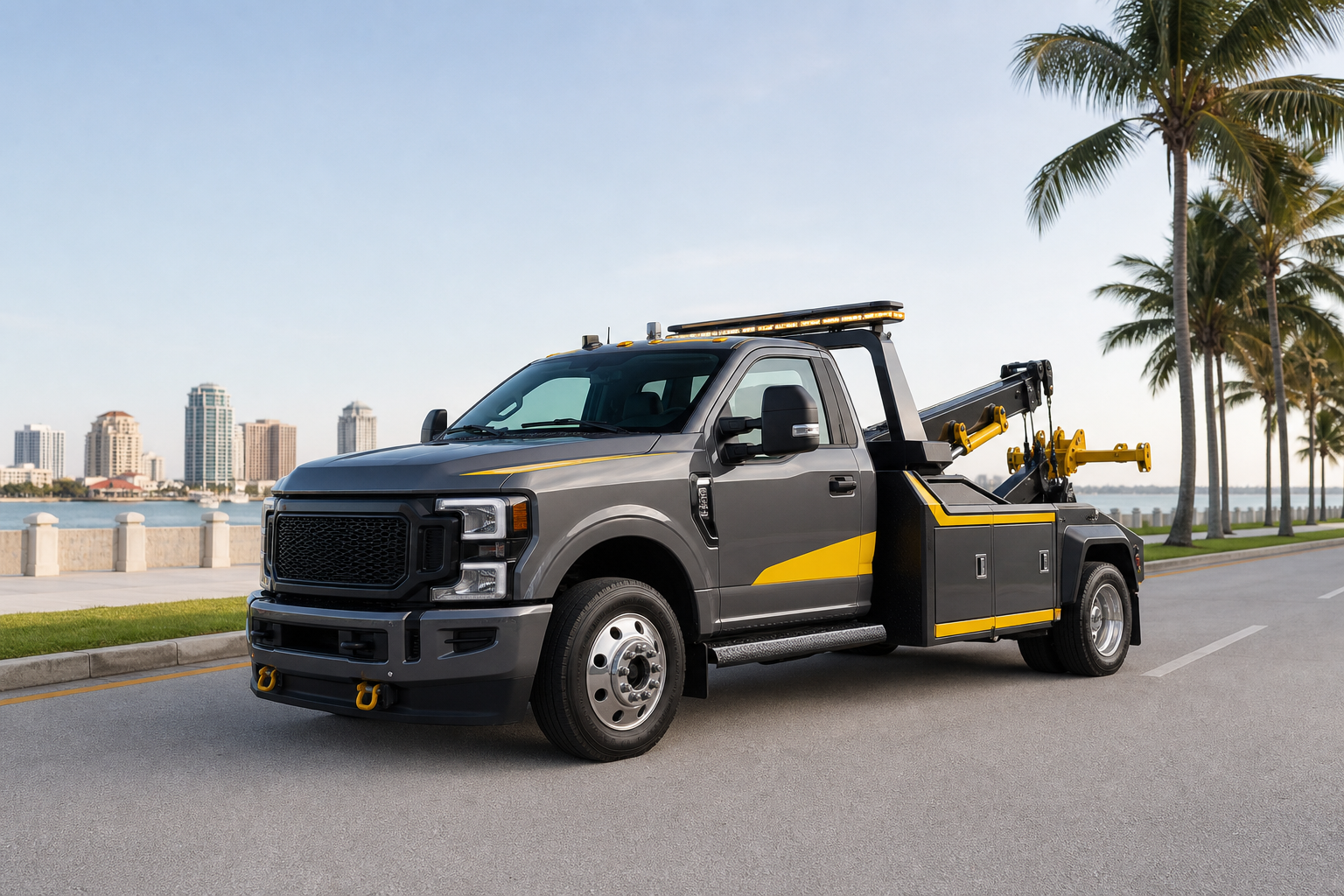
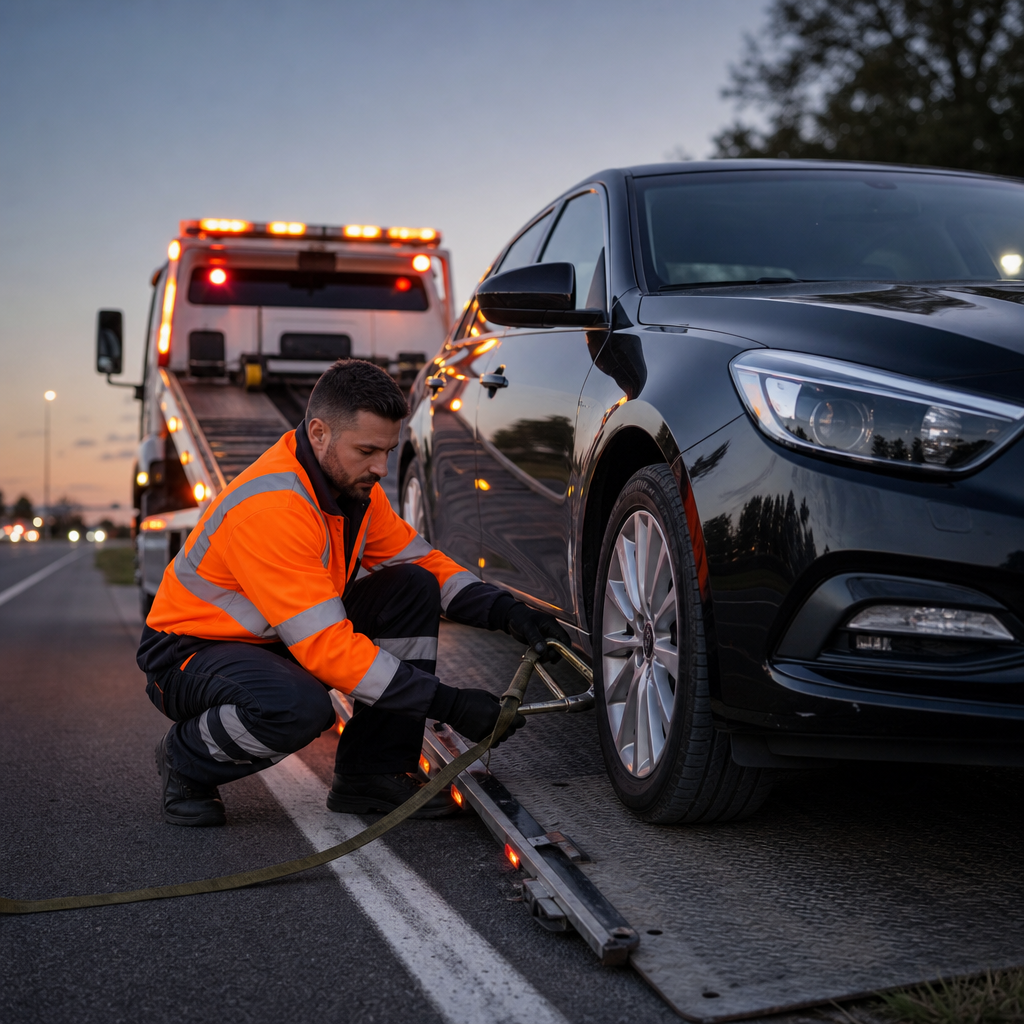
Request a tow when the burning smell is persistent, strong, unexplained, accompanied by smoke, or linked to a change in braking, steering, power, or dashboard warnings. A flatbed towing option can keep the vehicle off the road rather than requiring you to drive farther with an uncertain hazard.
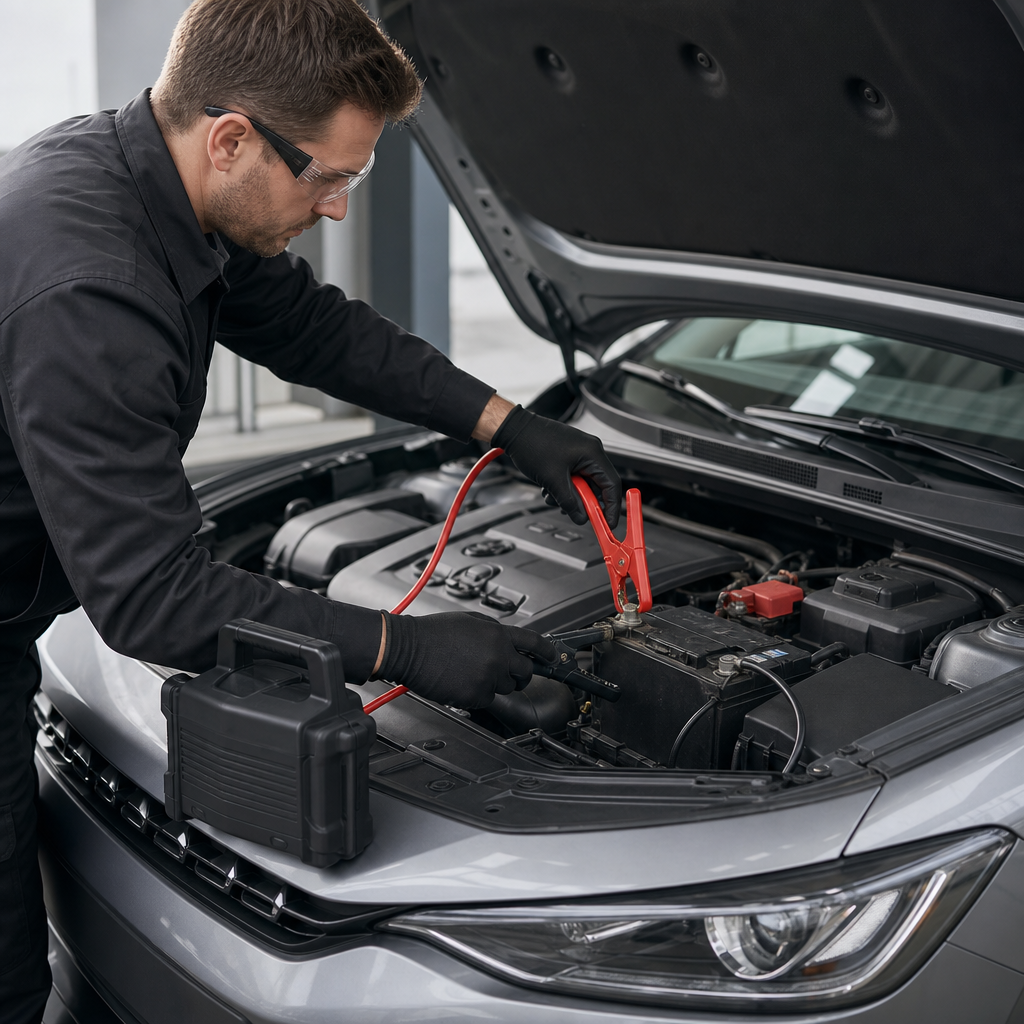
Request roadside assistance only when the situation clearly fits the service. For example, if the vehicle will not restart after you have stopped and there are no smoke or overheating signs, a jump start service may be appropriate. But a jump start does not address a burning odor. Tell the dispatcher about the odor before service is sent so the response can be matched to the situation.
5. Give the dispatcher useful, safety-relevant details
A concise report helps you avoid repeating the situation to multiple people. Share:
- Your location in West Palm Beach and the safest available description of where the vehicle is positioned
- Whether you are fully off the travel lane or exposed near traffic
- Whether there is visible smoke, fluid, or a warning light
- What the smell resembles and when it began: braking, accelerating, after stopping, or continuously
- Whether the vehicle can move normally or should not be driven
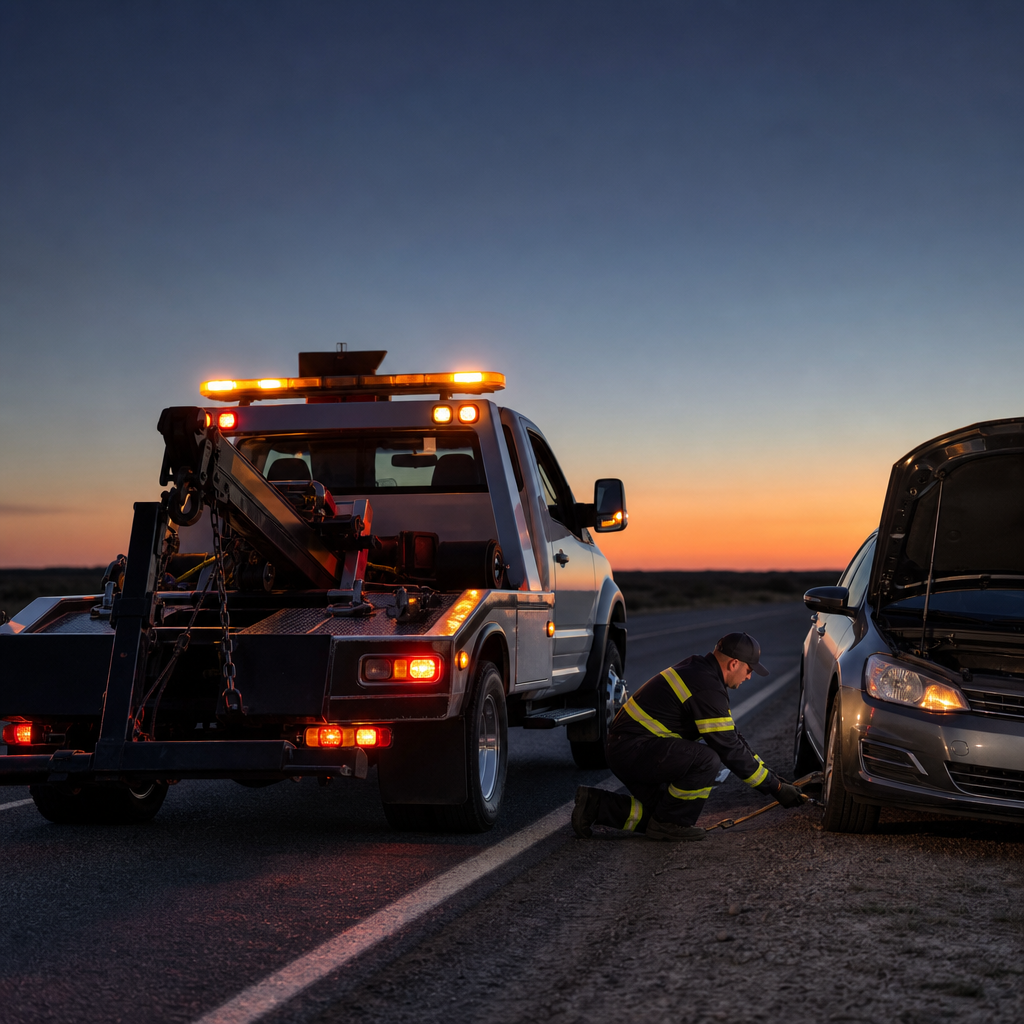
If the vehicle is in a dangerous position, say that first. A safety-first request for 24-hour towing is the right call when continuing to drive would expose you, passengers, or nearby traffic to more risk.
Before help arrives: a practical roadside checklist
- Keep hazard flashers on if they are functioning.
- Stay out of active traffic lanes and do not stand between your vehicle and moving traffic.
- Keep children and passengers with you in the safest available location.
- Do not return to the vehicle just to retrieve nonessential items if smoke or traffic conditions make it risky.
- Do not drive “just a short distance” to test whether the smell fades.
- Have the vehicle make, model, color, and your location ready for the service provider.
FAQs
Can I keep driving if the burning smell goes away?
Only consider monitoring if the odor was faint, brief, fully gone, and the vehicle has no warning lights, smoke, leaks, vibrations, or braking and steering changes. If the odor returns, becomes stronger, or appears with any other symptom, pull over and request help.
What does a burning plastic or electrical smell mean?
A sharp melting-plastic or electrical odor can indicate heat involving wiring, insulation, or another component. Because the source is not safe to diagnose while driving, pull over promptly. If the odor is strong or there is smoke, turn off the engine after stopping safely and arrange towing.
Should I open the hood when I smell something burning?
Not if you see smoke, suspect overheating, or feel significant heat. Opening the hood can put you close to hot components and may worsen a hazardous situation. Stay back, observe from a safe distance, and report what you see to the towing dispatcher.
What if the smell happens only when I brake?
A burning smell connected to braking deserves a stop as soon as it is safe. If braking feels weak, the vehicle pulls, a wheel area is smoking, or the odor persists after stopping, do not continue driving. Request towing rather than testing the brakes in traffic.
Is a tow necessary if there is no visible smoke?
It can be. Visible smoke is an urgent warning, but a strong recurring odor, fluid leak, warning light, or change in vehicle behavior is enough reason to avoid further driving. When you cannot identify the cause with confidence, towing is the safer choice.