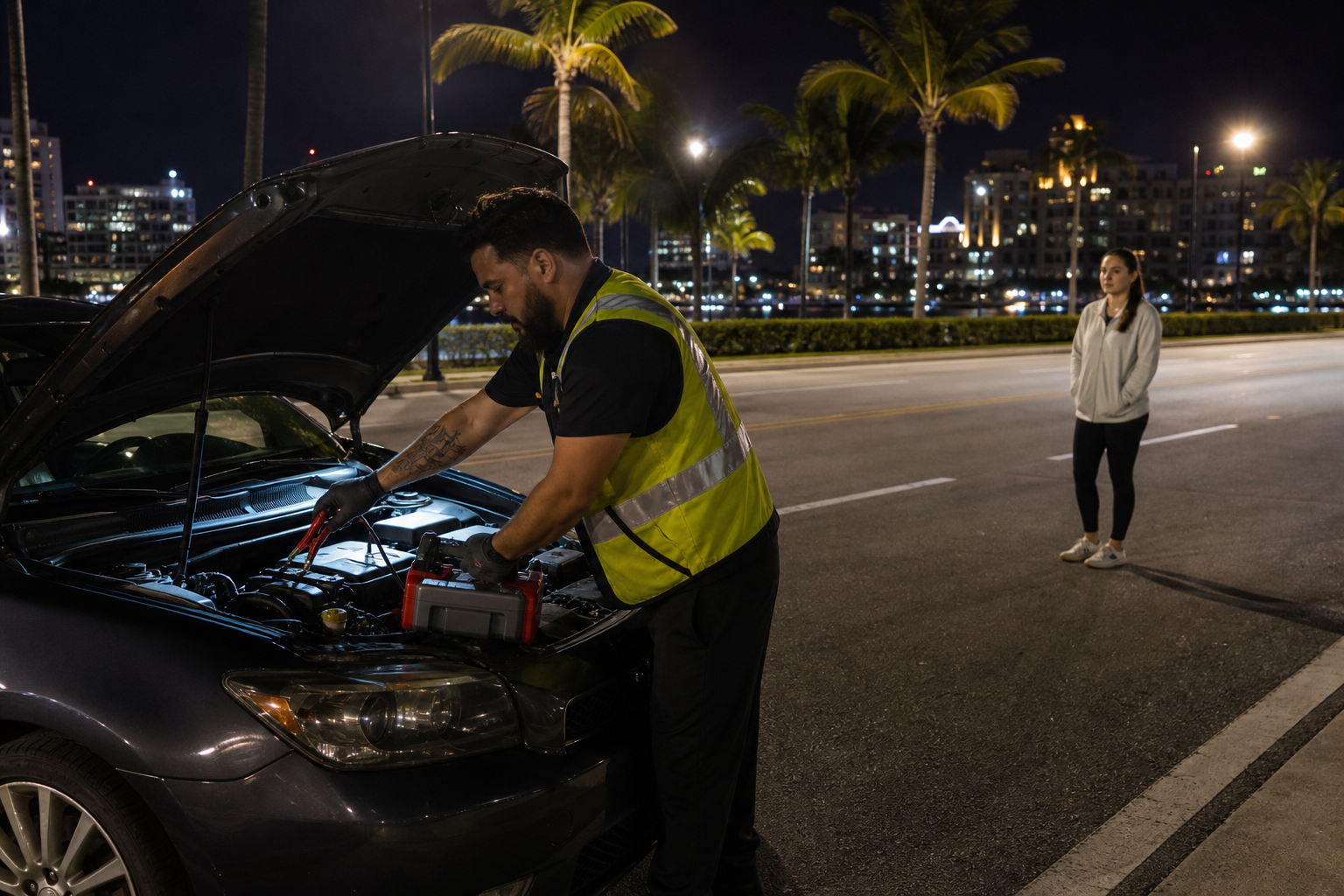
Use this rule first: attempt a jump-start only when the vehicle is in a secure, visible position, the battery looks undamaged, and you can identify the correct connection points. If any of those conditions are missing, stop and call roadside assistance.
Match the symptom to the safest response
A vehicle that will not start does not always have a simple discharged battery. Use this matrix before handling jumper cables or opening a portable jump pack.
| What you notice | What it may indicate | Do or don’t |
|---|---|---|
| Rapid clicking when you turn the key or press Start | The battery may have enough power for controls but not enough to crank the engine. | Continue checking. A jump may be reasonable if the battery and connection points appear normal. |
| Dashboard lights are dim or go dark during a start attempt | Battery voltage may be low, or a battery connection may be poor. | Continue only if safe. Do not touch or tighten damaged, hot, or heavily corroded parts. |
| No lights, sounds, or electrical response | The battery may be fully discharged, disconnected, or affected by another electrical problem. | Use caution. Call for help if the battery location, terminals, or designated jump points are unclear. |
| The engine cranks at normal speed but does not start | The problem may not be a discharged battery. | Stop repeated jump attempts. Request emergency towing assistance if the vehicle remains disabled. |
| One solid click, grinding, or another harsh mechanical sound | A starter or mechanical issue may be involved. | Do not keep trying. Repeated attempts can drain the battery without solving the cause. |
| Battery case is cracked, bulging, wet, leaking, or unusually hot | The battery may be damaged or unsafe to energize. | Do not connect cables or a jump pack. Move away and call roadside assistance. |
| Smoke, active sparking, a burning smell, or a strong chemical odor | An electrical fault or battery hazard may be present. | Stop immediately. Do not touch the battery or continue trying to start the vehicle. |
| Vehicle stalled while running and now will not restart | The charging system or another vehicle system may be involved. | A jump may provide only a temporary result. Arrange towing if it stalls again or warning indicators remain on. |
Stop or continue: make the decision before connecting anything
Stop and call roadside assistance when:
- You would need to stand in a traffic lane, around a blind approach, or in another exposed position.
- It is dark and you cannot clearly see the battery markings, terminals, remote jump points, or cable clamps.
- The vehicle is not fully in Park, the parking brake will not hold, or the vehicle is on unstable ground.
- The battery is damaged, leaking, swollen, frozen, excessively hot, smoking, or producing a strong odor.
- You cannot confidently distinguish the positive and negative connection points.
- The owner’s manual does not support the procedure you plan to use.
- The vehicle has a configuration you are unfamiliar with, including a battery hidden behind panels or designated remote terminals.
- Cables are frayed, clamps are loose, insulation is damaged, or the jump pack itself appears compromised.
- A previous jump attempt caused heavy sparking, hot cables, smoke, or repeated power loss.
- The engine cranks normally but will not start, suggesting the battery may not be the problem.
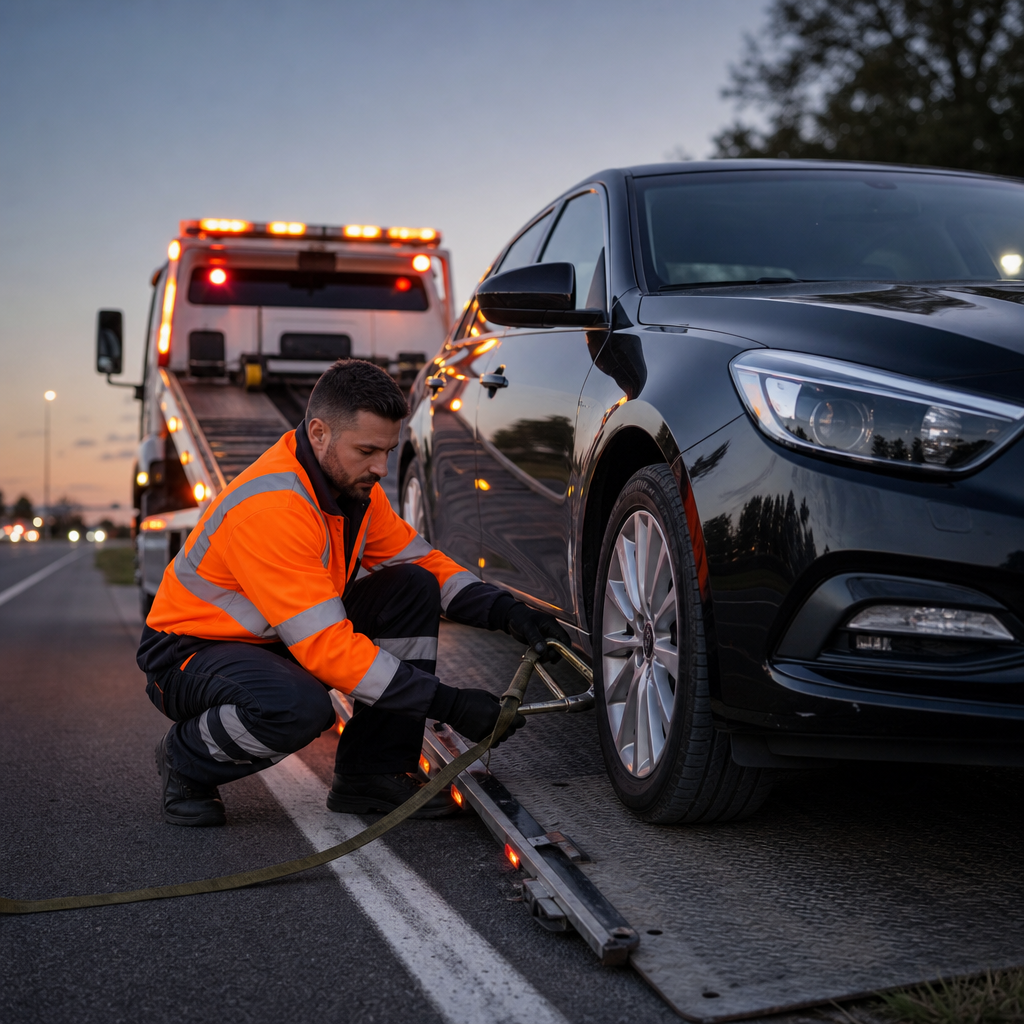
In these situations, request professional jump-start service rather than experimenting with connections. If the vehicle cannot be started or kept running safely, flatbed towing may be the more suitable next step.
Continue with a jump-start check only when:
- The vehicle is stationary, secure, and separated from moving traffic as much as the location allows.
- You have enough light to read terminal symbols and inspect every connection.
- The battery and cables show no obvious damage or unusual heat.
- You have the vehicle-specific instructions and can follow them exactly.
- The power source is designed for the vehicle and is in serviceable condition.
- No one needs to lean across moving engine components or stand between vehicles.
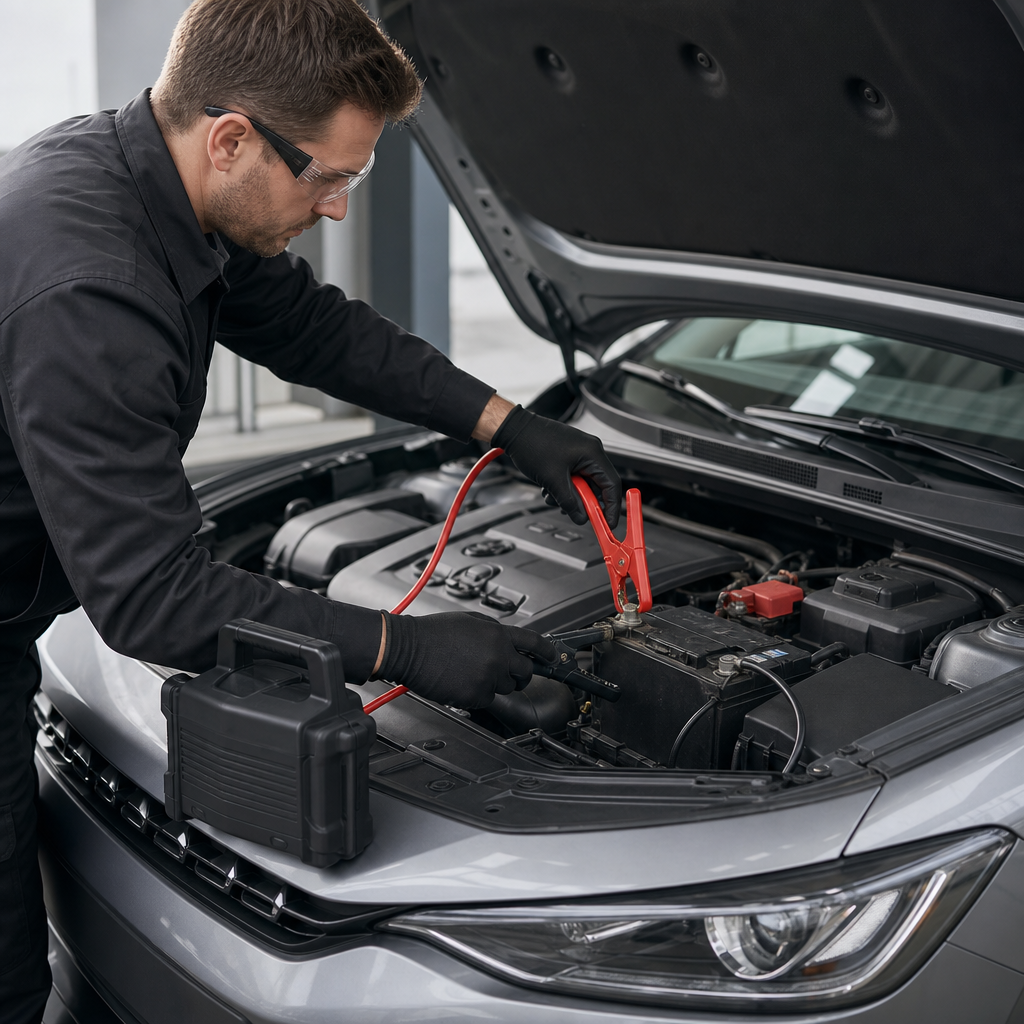
Do: follow the vehicle manual and the jump-pack or cable instructions in their stated order. Keep clamps separated until each one is intentionally placed. Confirm every connection before energizing a portable pack or starting a donor vehicle.
Don’t: guess based on cable color alone, let clamps touch each other, attach to an unidentified metal component, or bypass designated jump points. Never continue if a cable becomes hot or a connection produces persistent sparking.
Roadside checklist for West Palm Beach drivers
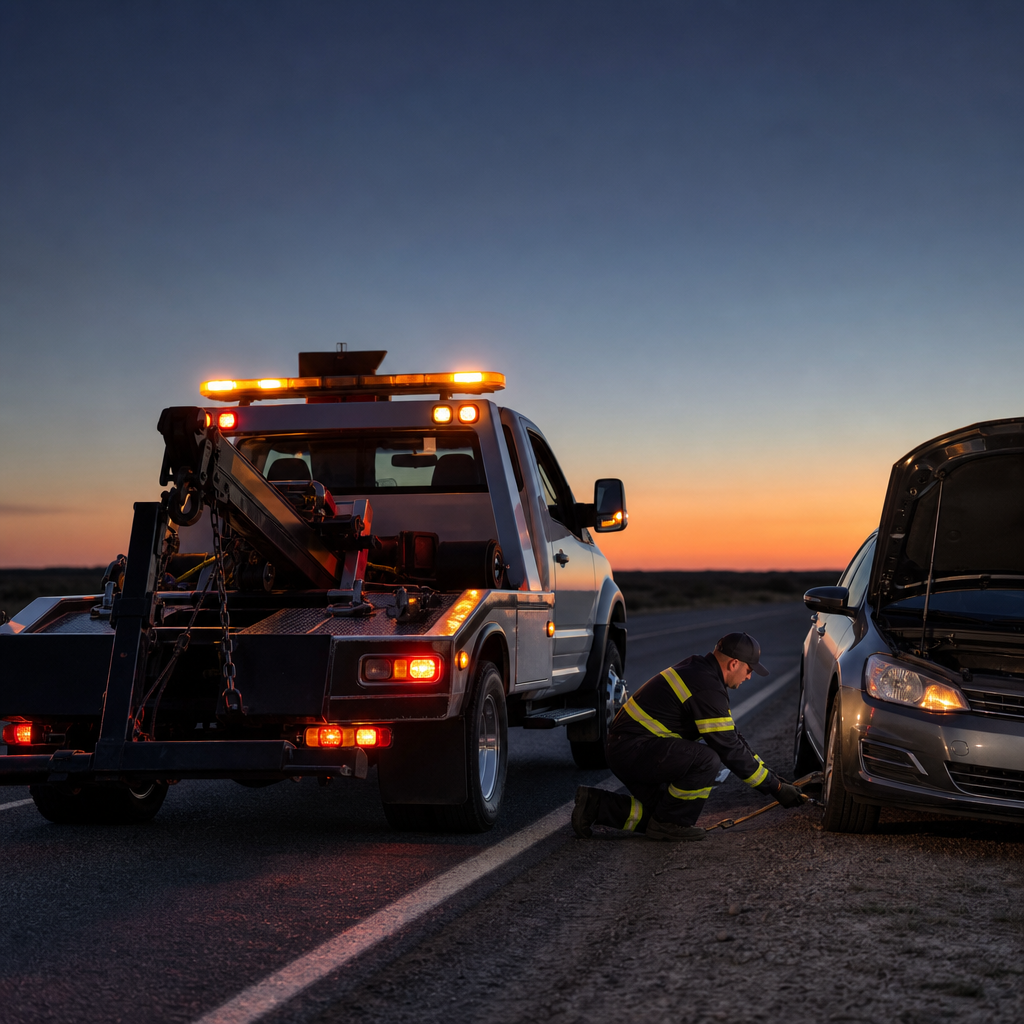
Nighttime visibility affects both the jump-start procedure and personal safety. The goal is not simply to illuminate the engine compartment; you also need to remain visible and avoid creating a second hazard.
- Secure the vehicle: select Park, set the parking brake, and switch off nonessential electrical loads.
- Assess your surroundings: note traffic movement, lighting, nearby people, and whether opening the hood would place you in an exposed position.
- Use light without sacrificing awareness: use a flashlight to inspect the battery or designated jump points. Do not rely on a phone light if doing so would leave you unable to communicate.
- Stay visible: if you have reflective clothing or a visibility aid, use it. Avoid standing directly in front of or behind the disabled vehicle.
- Keep passengers out of the work area: children, pets, and other passengers should not gather around the open hood or cables.
- Protect your location information: share your precise location with the roadside provider, but do not broadcast personal details to bystanders.
- Read before connecting: locate the jump-start section of the owner’s manual and identify the marked positive point and approved negative or ground point.
- Inspect the equipment: reject cables with exposed wire, damaged clamps, melted insulation, or signs of overheating.
- Limit repeated attempts: if the vehicle does not respond as expected, disconnect according to the equipment instructions and request help.
- Watch the result: after a successful start, check for warning lights, abnormal sounds, smoke, or unstable operation. A vehicle that starts and immediately dies may need towing rather than another jump.
If waiting outside feels unsafe, remain in a secure location when practical and tell the dispatcher where you will be. Keep your phone available, monitor the approaching provider’s updates, and do not accept an unverified person’s offer to connect equipment to your vehicle.
Prepare for jump-start service or towing
An information-ready call helps the roadside provider understand whether to send jump-start equipment or prepare for a tow. Have these details ready:
- Your exact location: provide the address, parking-area description, business name if applicable, and any clear access instructions.
- Vehicle description: share the year, make, model, color, and license plate information.
- Vehicle position: explain whether it is in a driveway, garage, parking structure, lot, or roadside space. Mention low clearance, a locked gate, tight access, or blocked wheels.
- What happened: describe whether the vehicle was parked and would not start, stalled while running, or lost electrical power.
- Current symptoms: report clicking, dim lights, no electrical response, normal cranking, warning indicators, smoke, odors, heat, or visible battery damage.
- Attempts already made: state whether anyone connected cables or a jump pack and what happened.
- Safety conditions: mention darkness, limited visibility, nearby traffic, or any reason you cannot safely remain by the vehicle.
Call-to-action: When requesting roadside assistance in West Palm Beach, be ready with your location, vehicle details, starting symptoms, battery condition, and access constraints. Ask whether the situation is suited to a jump-start or should be handled as a tow.
Jump-start safety FAQs
Can I try another jump if the first attempt did nothing?
First recheck the equipment instructions and vehicle manual. Do not repeat the attempt if connections became hot, heavy sparking occurred, the battery looks damaged, or the engine cranks normally without starting. Those signs call for roadside evaluation or towing.
Is clicking always proof that the battery is dead?
No. Rapid clicking often accompanies low battery power, but connection, starter, and electrical issues can produce similar symptoms. Treat clicking as a clue, not a diagnosis.
Should I jump a battery that has heavy corrosion?
Do not disturb heavy corrosion or connect clamps where secure metal contact cannot be confirmed. If the terminal area is obscured, loose, damaged, or wet, request professional assistance.
What if the vehicle starts but shuts off again?
Do not rely on repeated jumps. A charging-system or other vehicle problem may be preventing continued operation. Move only if the vehicle can be operated safely; otherwise arrange towing.
Is a portable jump pack safer than jumper cables?
A jump pack avoids positioning a second vehicle beside yours, but it still requires correct polarity, suitable equipment, undamaged connection points, and strict use of the manufacturer’s instructions. It is not safe to use on a visibly damaged battery.