Do not keep turning the key or pressing the start button over and over because the dashboard is lit. Repeated attempts can drain the remaining battery charge, create more confusion about the symptoms, and leave you with fewer safe options at a traffic-exposed location. Instead, make one deliberate observation: what happens when you try to start the vehicle?
Dashboard lights mean that some electrical power is reaching the vehicle. They do not confirm that the battery has enough power to crank the engine, that the shifter is in a recognized position, or that a starting-system fault is safe to troubleshoot at the roadside. This checklist helps drivers in West Palm Beach, Palm Beach County, decide whether to stop, make one limited safe check, or arrange roadside assistance.
Immediate action: secure yourself before diagnosing the car
- Move only if the vehicle can be moved safely and legally under its own power. Do not attempt to push it through traffic.
- Turn on hazard flashers if they operate, particularly if your vehicle is exposed to passing traffic or difficult for approaching drivers to see.
- Put the vehicle in Park, set the parking brake, and keep occupants out of the traffic-facing side.
- If your location feels unsafe, prioritize getting yourself to a safer area. Do not remain beside the vehicle just to watch it, and do not wait inside it if that places you in danger.
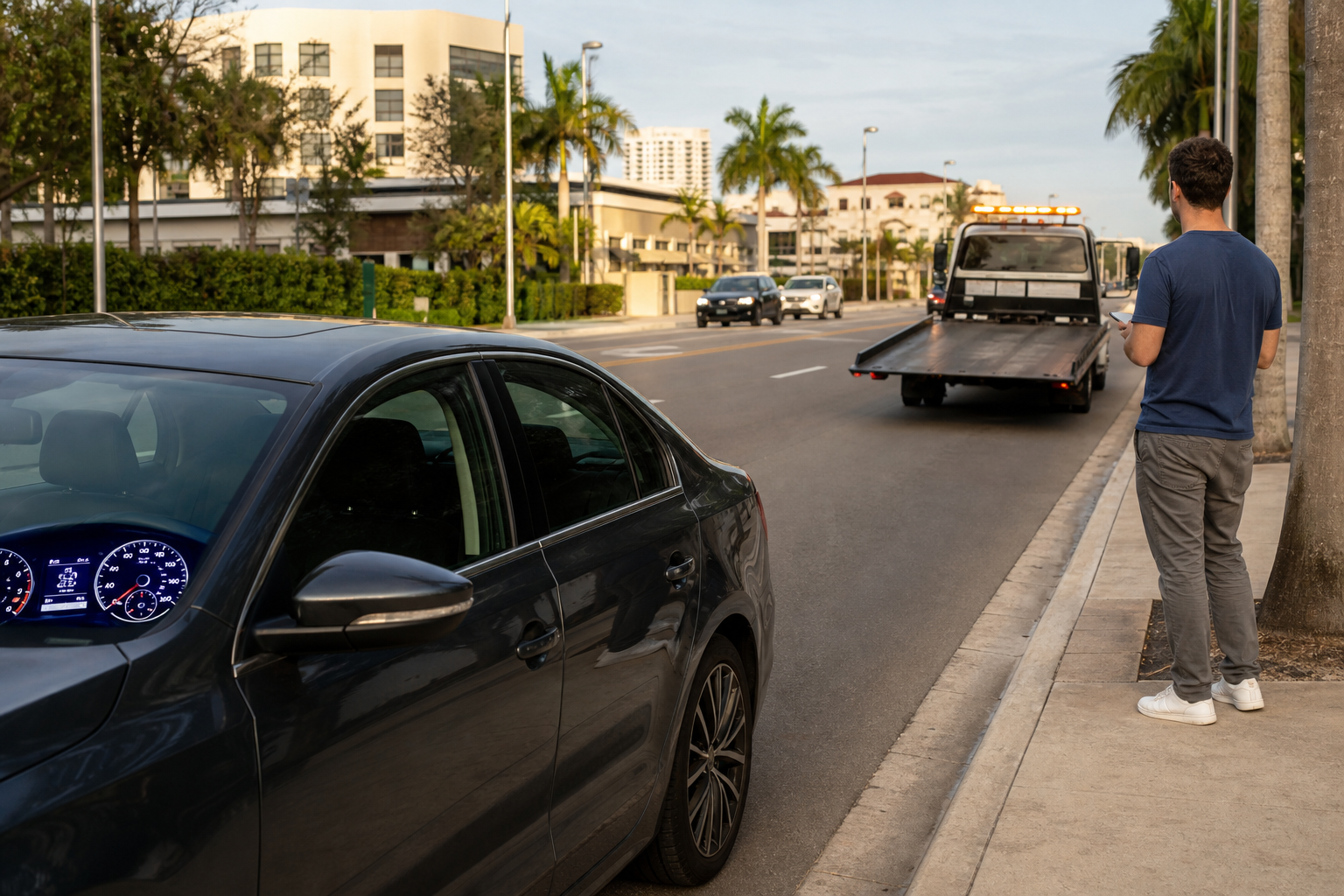
- Use your phone from a protected position to arrange emergency towing help when the vehicle cannot be started safely.
Risk signals: stop trying to start it when you see these signs
A no-start is not always a battery problem. The following signs favor stopping attempts and requesting assistance rather than continuing roadside troubleshooting.
- Smoke, a burning smell, sparking, or visible fluid: Do not jump-start the vehicle or keep trying to start it. Move away from the vehicle if you can do so safely and request help.
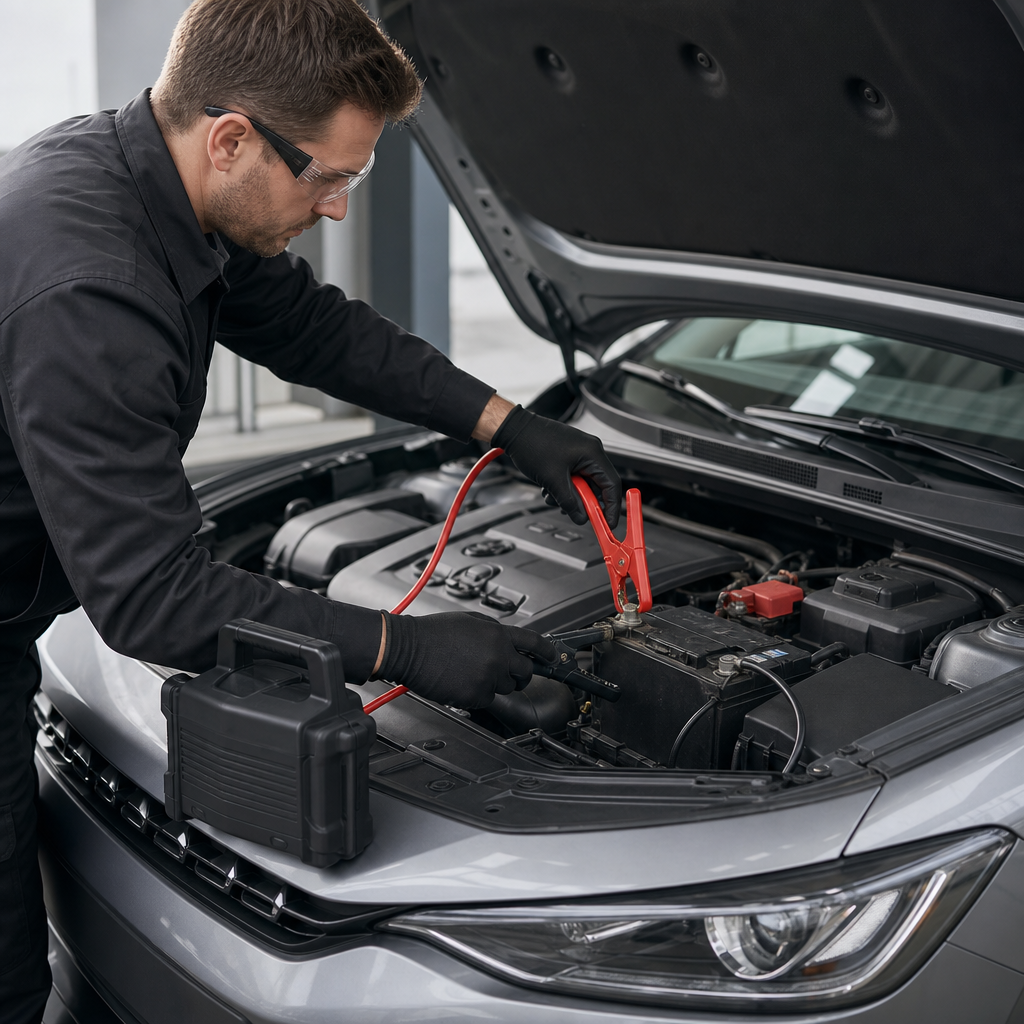
- Rapid clicking, dimming lights, or a slow crank: This often points to weak battery power, but repeated cranking can drain it further. A professional jump start service may be appropriate if there are no other warning signs.
- One solid click with no engine movement: The battery may not be the only issue. Stop repeated attempts; the vehicle may need towing rather than a boost.
- Normal-bright dashboard lights but no crank at all: The concern may involve the start command, brake-pedal recognition, shifter position, or another electrical issue. Do not assume bright lights rule out a no-start problem.
- The engine cranks normally but never starts: This is generally not a roadside jump-start situation. Avoid repeated long cranking attempts and arrange towing.
- A warning light remains on with a serious message or the vehicle behaves unpredictably: Stop attempting to drive it. A flatbed is often the cautious transport choice for a vehicle that cannot be started or assessed safely.
Safe actions: one careful check, not a roadside repair session
If there is no smoke, odor, leaking fluid, or immediate traffic danger, make these limited checks once. The purpose is to identify an obvious operating issue, not to repair the vehicle on the shoulder.
- Check the basics. Confirm the parking brake is set, the vehicle is in Park, and your foot is firmly on the brake if it uses a push-button start.
- Try one start attempt. Listen and observe: silence, clicking, slow cranking, normal cranking, or a brief start followed by a stall are useful details for roadside assistance.
- Check the key or fob situation. If your vehicle displays a key-not-detected message, follow only the key-fob backup-start procedure in your owner manual. Do not improvise around steering-column, ignition, or electrical components.
- Use Neutral only if your owner manual specifically permits the procedure. Some vehicles may recognize Neutral differently from Park, but this is not universal advice. Keep the brake applied, follow the manual exactly, make one attempt, then stop if it does not start.
- Share the symptom, not a diagnosis. Tell the dispatcher, for example, “dash lights are bright and there is one click,” or “the engine cranks but will not fire.” This helps determine whether a jump start or flatbed towing is the better next step.
Avoidable mistakes that can turn a no-start into a bigger problem
- Draining the battery with repeated attempts: Limit start attempts. Long or frequent cranking can leave the vehicle unable to power hazards, locks, or communications reliably.
- Accepting a jump without checking for danger signs: Do not connect jumper cables near smoke, damaged battery components, unusual odors, or visible electrical damage.
- Opening the hood beside active traffic: Your visibility and personal safety come first. A battery check is not worth standing in an exposed position.
- Letting an unfamiliar person improvise: Avoid bypassing components, manipulating wiring, or using tools around the battery. Request trained roadside assistance instead.
- Driving immediately after a temporary start: If the vehicle starts after struggling, stalls, shows persistent warnings, or has electrical behavior you do not trust, do not gamble on making it farther through West Palm Beach traffic. Request towing to a destination you choose.
Stop-or-continue decision checklist
Continue with one limited check only when all of these are true:
- You are in a reasonably safe position away from immediate traffic exposure.
- There is no smoke, burning smell, sparking, or visible fluid.
- The vehicle is secured in Park with the parking brake set.
- You can follow the owner-manual procedure for your specific key, fob, or Neutral-start guidance.
- You will stop after one careful attempt if the vehicle still does not start.
Stop and call for help now when any of these are true:
- You are exposed to moving traffic, have poor roadside visibility, or do not feel safe where you are.
- The vehicle clicks repeatedly, cranks slowly, or has no response after a single careful attempt.
- The engine cranks but will not start, or starts and immediately dies.
- You smell burning, see smoke, notice a leak, or see damaged battery or cable components.
- You need the vehicle moved rather than temporarily restarted.
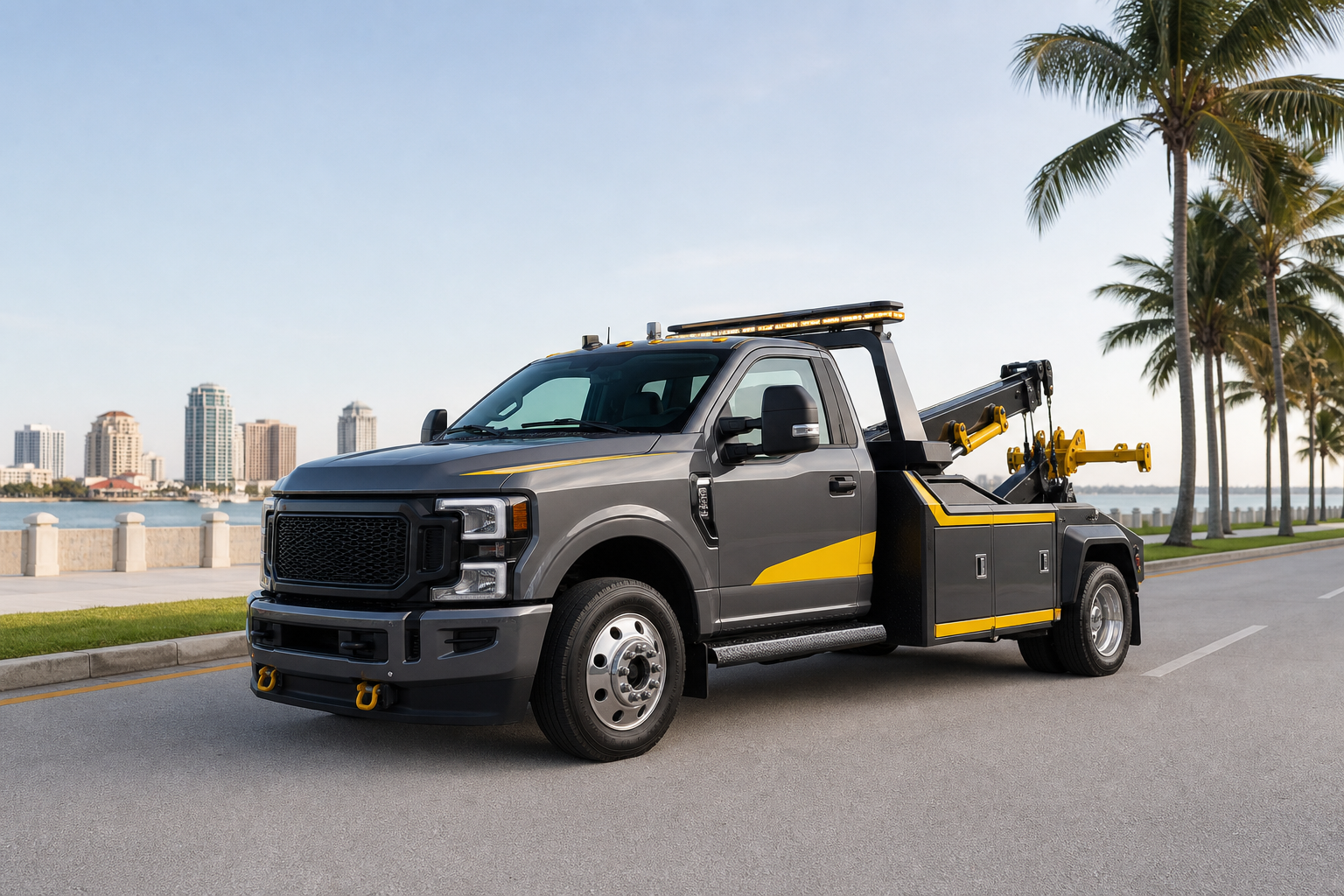
For a likely low-battery symptom in a safe setting, request a jump-start assessment. For a no-crank issue, persistent warnings, an unsafe location, or a vehicle that cranks but will not run, request 24-hour towing. A calm handoff starts with your location in West Palm Beach, the vehicle type, and the exact start symptom you observed.
Quick answers drivers ask at the roadside
Can dashboard lights come on if the battery is too weak to start the engine?
Yes. Dashboard lights require far less power than cranking an engine. Dim lights, rapid clicking, or a slow crank can all be consistent with insufficient battery power.
If the lights are bright, does that mean it is not the battery?
No. A battery can still have enough power for lights but not enough available power under the heavier load of starting. Bright lights also do not rule out other no-start causes.
Should I keep trying if the engine cranks but will not start?
No. A brief, limited attempt is enough to identify the symptom. If the engine cranks normally but does not start, repeated cranking is unlikely to solve it and can drain the battery.
Is it safe to wait in my vehicle for help?
It depends on the location. If the vehicle is exposed to traffic or you feel unsafe, move to a safer protected area when possible. Personal safety matters more than staying with or monitoring the vehicle.