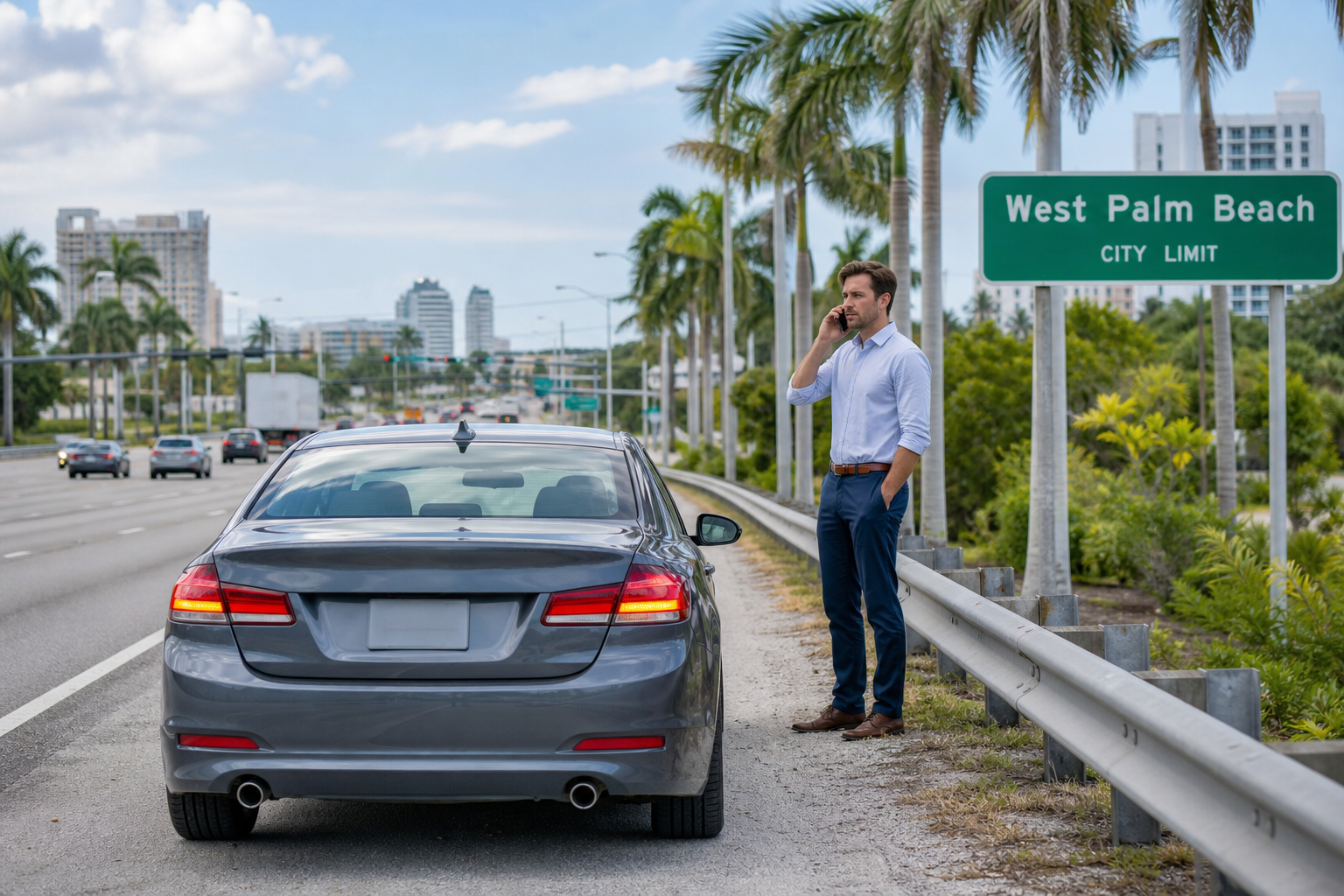
A vehicle problem can turn stressful quickly, especially on a busy West Palm Beach road, during heavy rain, or after dark. Whether your car will not start in a parking lot, has a flat tire on Okeechobee Boulevard, or loses power near I-95, the first priority is not diagnosing the problem. Your priority is getting yourself and any passengers out of danger.
This guide explains the safest next steps after a breakdown, how to decide whether roadside help or towing is appropriate, and what information will help a tow provider find you without delay.
Immediate Actions: Do These First
- Stay calm and keep a firm grip on the steering wheel.
- If the vehicle still moves, signal and pull as far from moving traffic as you safely can.
- Turn on your hazard lights as soon as practical.
- Shift into park, set the parking brake, and keep your seat belt on until you are in a safer position.
- If you are in an active traffic lane, on a narrow shoulder, or near fast-moving vehicles, call emergency services if there is an immediate danger.
- Request towing or roadside assistance when the vehicle cannot be driven safely.
Get Your Vehicle to the Safest Available Location
If your vehicle is still operational enough to move, aim for a location away from through traffic. A parking lot, wide shoulder, service road, gas station, or side street may be safer than stopping at the edge of a major roadway. Avoid abrupt steering or hard braking unless necessary to prevent a collision.
In West Palm Beach, traffic can move quickly on I-95, Florida's Turnpike access roads, US-1, Okeechobee Boulevard, Southern Boulevard, and other major routes. A stopped vehicle on or near these roads deserves extra caution. If you can safely exit the roadway, do so. If you cannot, keep your hazards on and focus on protecting yourself rather than trying to inspect the vehicle beside traffic.
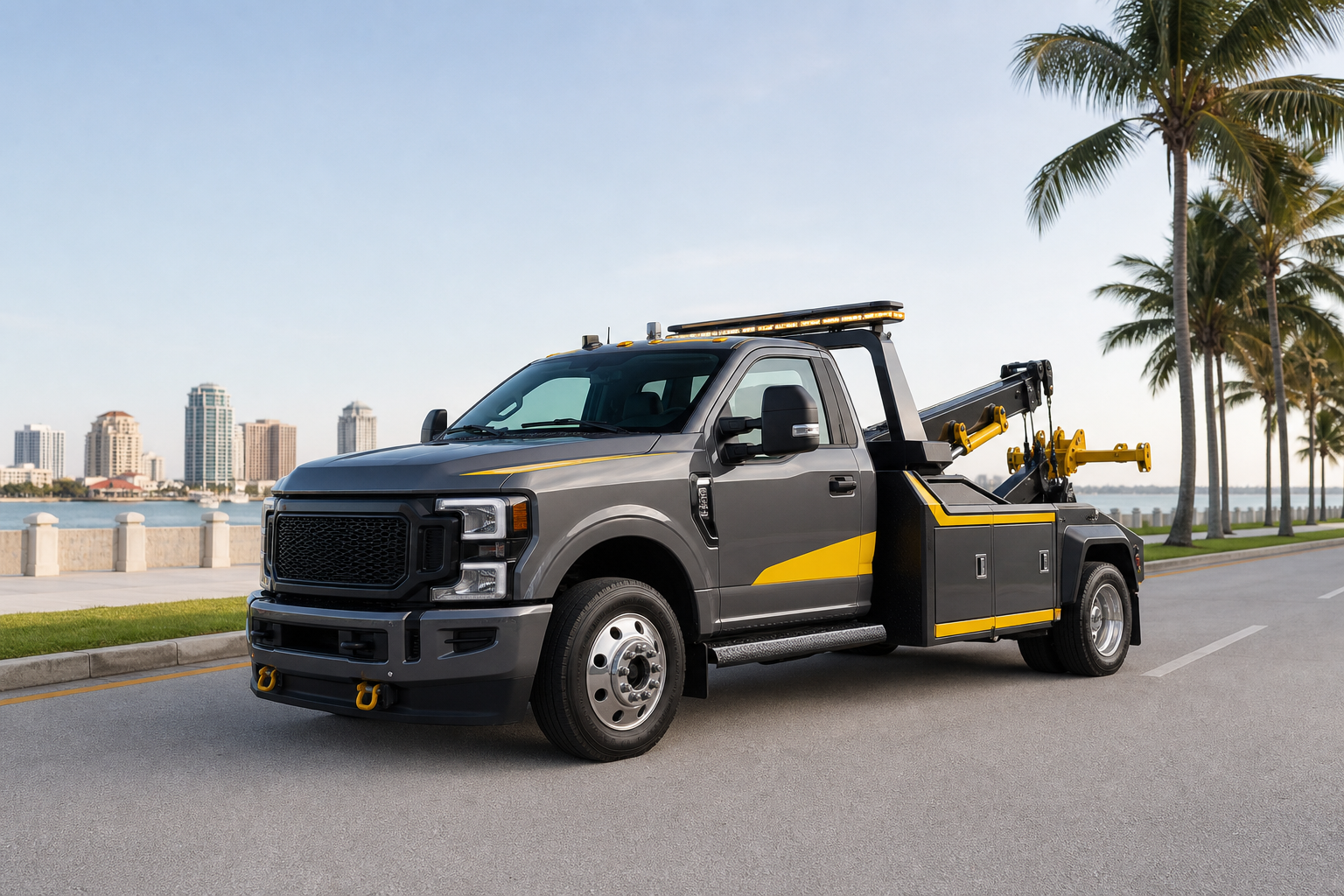
Do not continue driving simply because the vehicle can still creep forward. Driving with an overheating engine, severe tire damage, steering trouble, low oil pressure warning, smoke, or an illuminated warning that indicates a serious issue can create a greater roadside risk. When you are uncertain whether the car is safe to drive, arranging emergency towing">emergency towing is often the safer choice.
Make Yourself Visible Without Creating More Risk
Hazard lights are the most important first signal to other drivers. Use them while your vehicle is disabled or moving unusually slowly due to a problem. If it is dark, rainy, or visibility is poor, keep your lights on if doing so does not drain a failing battery.
If you have reflective triangles, cones, or a roadside safety marker, use them only if you can place them without entering an active traffic lane or walking close to moving vehicles. Do not put yourself at risk to set out equipment. Visibility tools are helpful, but a safe position for you and your passengers matters more.
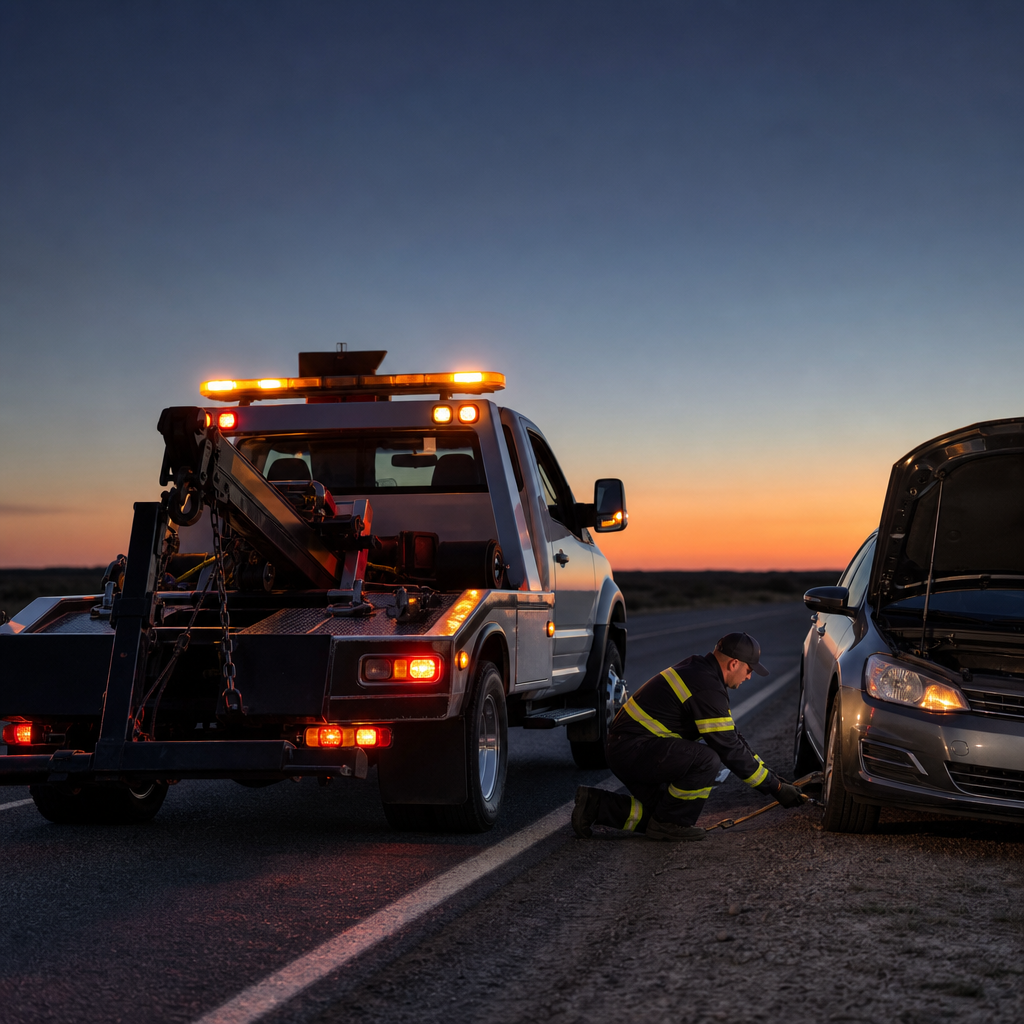
At night, avoid standing where other drivers may not expect a person to be. Stay clear of blind curves, highway ramps, intersections, and the rear of your vehicle. If you need to use your phone, do it from a protected location whenever possible.
Decide Whether to Stay in the Vehicle or Move Away From It
There is no single answer for every breakdown. Your safest choice depends on where the vehicle is stopped, traffic speed, weather, and whether you have a protected place to wait.
Stay in the vehicle when:
- You are stopped on a road with no clearly safe place to stand.
- Traffic is moving close to your vehicle.
- Weather conditions make walking or standing outside more dangerous.
- You are in a well-lit, reasonably safe location and can keep the doors locked while you wait.
Move away from the vehicle when:
- You can safely reach a protected area such as a sidewalk, parking lot, or space behind a barrier.
- Your vehicle is smoking, smells strongly of fuel, or appears at risk of fire.
- You are positioned where another vehicle could strike yours.
If you exit, use the door facing away from traffic when possible. Keep children and passengers together. Do not stand directly in front of or behind a disabled vehicle, where you could be exposed if another driver hits it.
What to Do if Your Car Will Not Start
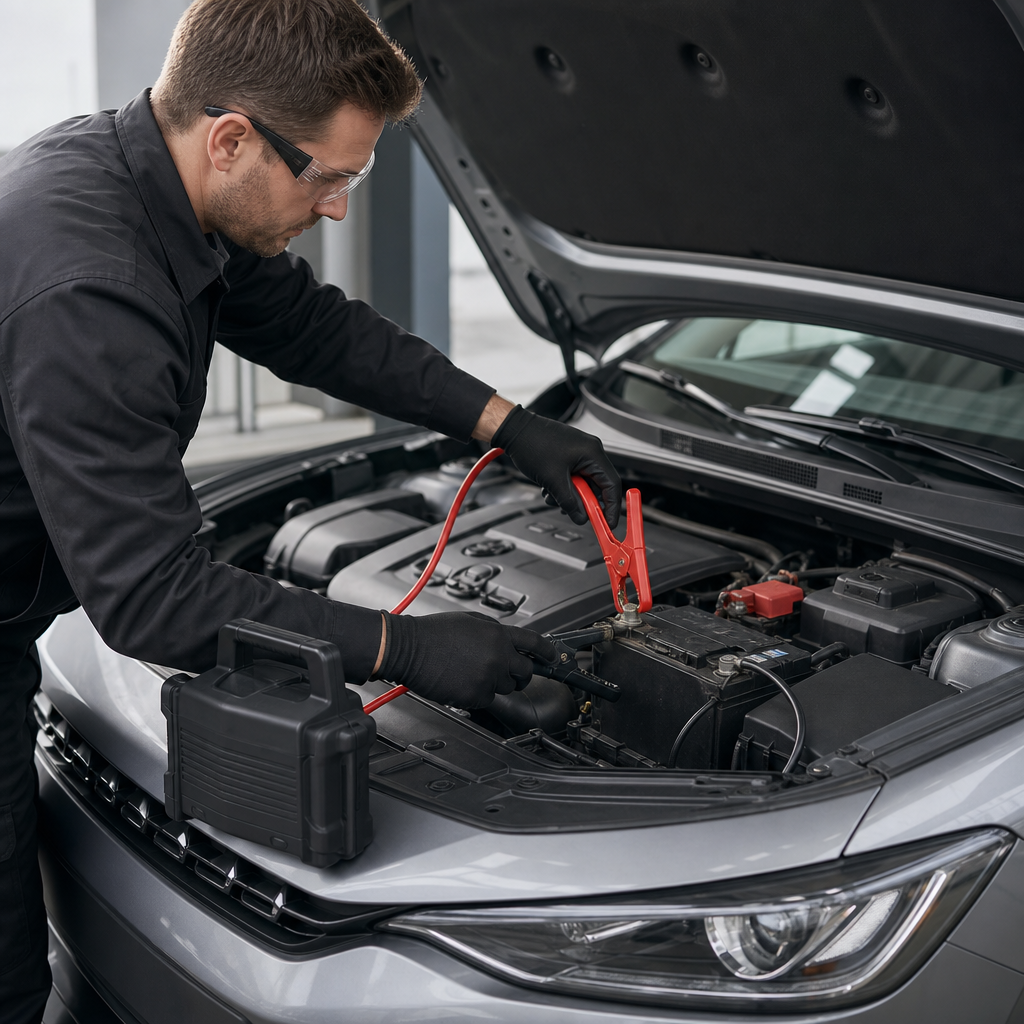
A no-start situation is often less dangerous when it happens at home, work, or in a parking lot, but it can still leave you stranded. Before requesting a tow, note what happened: did the engine click, did the dashboard light up, did the car crank slowly, or did it start and then stall? That information can help determine whether a jump start service">jump start service may be appropriate.
A jump start may help when the battery is weak, but it is not a solution for every no-start problem. If there are damaged cables, smoke, a burning smell, repeated failed attempts, or warning signs that suggest a larger issue, do not keep trying to start the vehicle. Request assistance instead.
When to Call for Towing Instead of Trying to Drive
Call for towing when driving the vehicle could put you, your passengers, or other road users at risk. Towing is especially appropriate when the vehicle has a flat tire without a safe or usable spare, cannot start after reasonable attempts, has overheated, has steering or braking concerns, has been damaged in a collision, or is stranded somewhere unsafe.
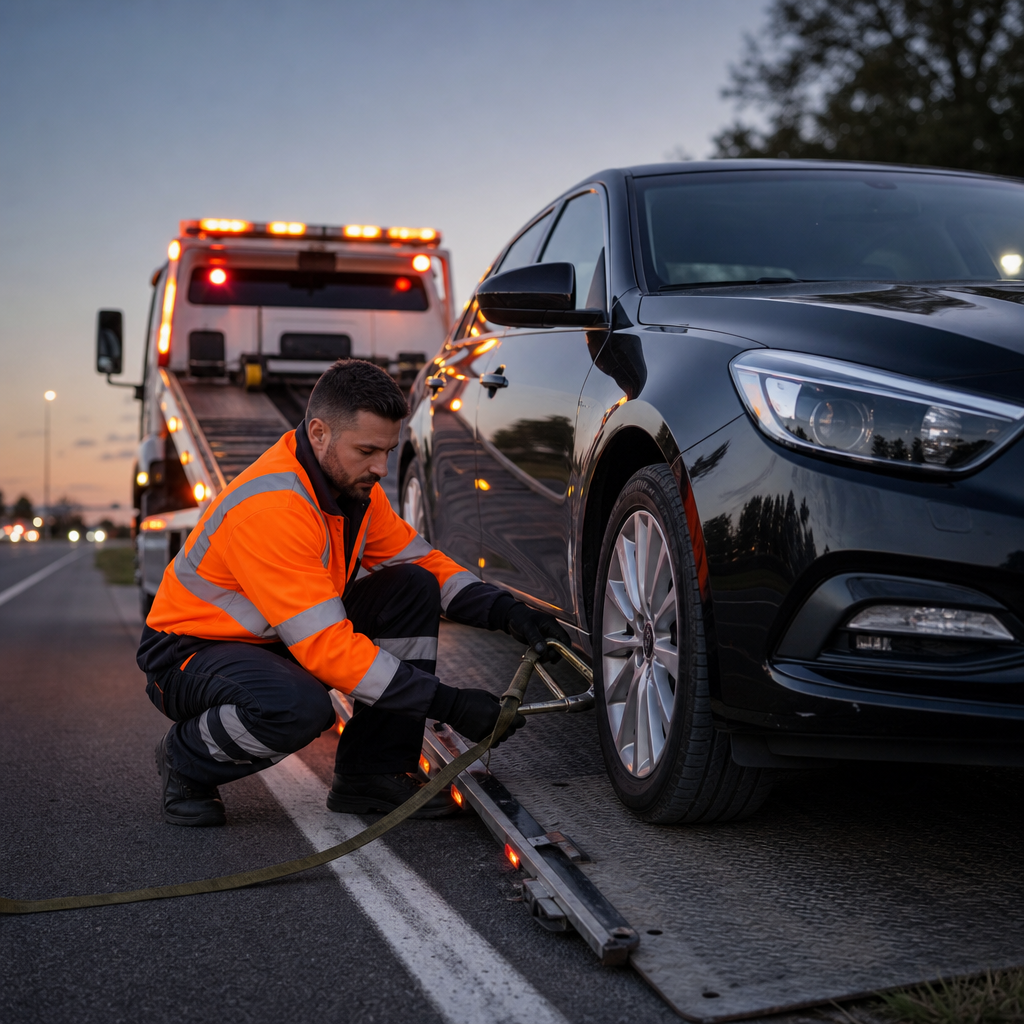
For many passenger vehicles, a flatbed tow">flatbed tow is a practical option when the vehicle should be kept fully off the road during transport. Tell the towing provider if the car is in a garage, has limited clearance, is blocked in, has a locked steering wheel, or cannot roll normally. Clear details help the operator bring the right equipment.
If you are stranded late at night, in severe weather, or on a major road, use a provider offering 24-hour towing">24-hour towing so you can focus on getting to a safe location rather than waiting for normal business hours.
Information to Have Ready When You Call
You do not need to know the mechanical cause of the breakdown. The most useful information is your exact location and the vehicle's condition.
- Your location, including the road name, direction of travel, nearest cross street, exit, landmark, or business name.
- The vehicle's make, model, color, and approximate size.
- What happened: no start, flat tire, overheating, collision damage, locked wheel, or another visible problem.
- Whether the vehicle is in a parking lot, garage, driveway, shoulder, median, or active lane.
- Your preferred destination, such as home, a repair facility, or another safe location.
- A phone number where the driver can reach you on arrival.
If you are unsure exactly where you are, check your phone's map app for a nearby business, intersection, or location pin. On highways, look for exit numbers and roadside signs. Avoid walking along traffic lanes to search for a marker.
Breakdown Safety Checklist While You Wait
- Keep hazard lights on if the vehicle has power.
- Lock doors if you are waiting inside the vehicle.
- Keep your phone charged when possible, but preserve battery by closing unnecessary apps.
- Share your location with a trusted contact if you are alone.
- Gather essential belongings before the tow arrives, including medication, keys, wallet, phone, and child safety items.
- Do not accept help that makes you uncomfortable or requires you to enter an unsafe area.
- Do not crawl under the vehicle or attempt roadside repairs near traffic.
- Watch for the tow provider's call or message so you can confirm your position safely.
Frequently Asked Questions
Should I turn on hazard lights if my vehicle is overheating?
Yes, use hazard lights while you are pulling over or stopped in a location where other drivers need warning. Once safely stopped, turn off the engine and avoid opening a hot radiator or coolant system.
Can I stay in my car while waiting for a tow truck?
Often, yes, if the vehicle is in a reasonably safe place away from traffic and there is no fire, smoke, fuel smell, or collision risk. If your location is exposed to fast-moving traffic, move to a protected area only if you can do so safely.
What location details are most helpful in West Palm Beach?
Provide the road name, nearest intersection or business, travel direction, and whether you are near an exit, ramp, median, shoulder, or parking lot. On larger roads such as I-95 or Okeechobee Boulevard, direction of travel is particularly useful.
Do I need a tow if I have a flat tire?
Not always. If you have a usable spare and can change it from a safe location, towing may not be necessary. If the tire is badly damaged, you do not have a safe place to work, lack a usable spare, or are near traffic, requesting roadside help or towing is the safer option.
What should I remove from my car before it is towed?
Take personal essentials and valuables, including keys, identification, medications, documents, electronics, and any items you will need at your destination. Ask the tow operator what should remain in the vehicle for safe transport.
A breakdown is easier to manage when you treat safety as the first task and vehicle recovery as the second. Pull over when safe, make the vehicle visible, avoid exposure to traffic, and call for the appropriate help when the car cannot be driven with confidence.