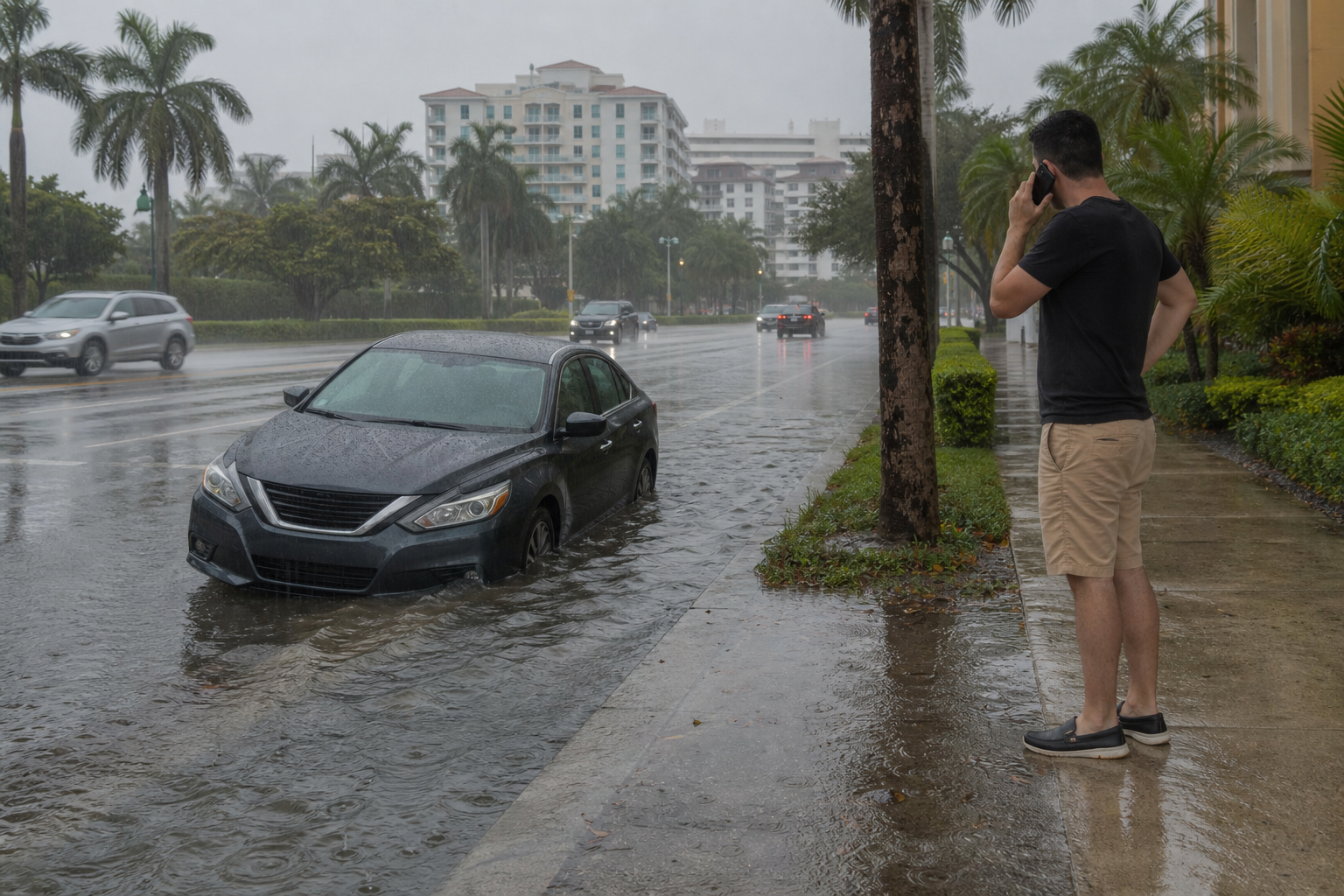
The highest-risk mistake after driving into floodwater is trying to restart a vehicle that stalled or was shut off while wet. A safer move is to leave the ignition off, get yourself out of traffic exposure if you can do so safely, and arrange a tow or roadside assessment rather than repeatedly turning the key or pressing the start button.
Floodwater can reach systems that do not show obvious damage from the driver’s seat. Restarting may draw water into places where it does not belong, create electrical problems, or turn a potentially limited incident into a more involved mechanical issue. For a driver in West Palm Beach, Florida, the immediate problem is also visibility: rain, spray, standing water, and moving traffic can make a stopped vehicle difficult for other drivers to see.
Do this now: If the engine stopped in water, do not restart it. Turn on hazard lights only if they work, move to a safer location away from traffic when possible, and request emergency towing help">emergency towing help with your location, vehicle condition, and water exposure details.
Situation matrix: what the water exposure may mean for your next move
| What you notice | What it can indicate | Best immediate action |
|---|---|---|
| The engine stalled while driving through water. | Water may have reached the engine intake, electrical connections, or other components. | Do not restart. Exit the travel area safely and arrange towing. |
| The engine is off, but you are unsure how deep the water became. | Water depth and how long the vehicle sat in it may be unclear. | Leave it off. Do not test-start it “just once.” Request a tow if water reached beyond the tires or the vehicle was surrounded by moving water. |
| The vehicle still runs after passing through shallow water. | It may be operable, but wet brakes, reduced visibility, or warning indicators can create a separate safety concern. | Pull over only in a safe, visible place. If warning lights appear, the engine runs poorly, or braking feels unusual, stop and call for assistance. |
| You see water inside the cabin, trunk, or cargo area. | Water may have entered interior electrical areas or stored equipment compartments. | Avoid repeated electrical operation. Document what you can from outside the vehicle and arrange transport. |
| The vehicle is partly in a lane, shoulder, or low-visibility roadside position. | The immediate hazard may be passing traffic, not the vehicle itself. | Prioritize personal safety and roadside visibility. Do not stand near traffic or return to the vehicle simply to troubleshoot. |
Stop or continue: make the decision before touching the ignition
Use this as a practical stop/continue decision, not a diagnosis. The goal is to avoid adding risk while you are dealing with rain, reduced sightlines, and traffic in Palm Beach County.
Stop and call for towing if any of these apply
- The engine shut off in floodwater or immediately after crossing it.
- Water rose high enough that you cannot confidently describe it as shallow tire-level splash.
- You see smoke, smell burning, hear unusual mechanical noise, or receive a warning message after water exposure.
- The vehicle cranks but does not start after entering water. Do not keep trying.
- Braking, steering, lighting, or visibility is affected.
- Your vehicle is stopped where rain and traffic make the roadside unsafe.
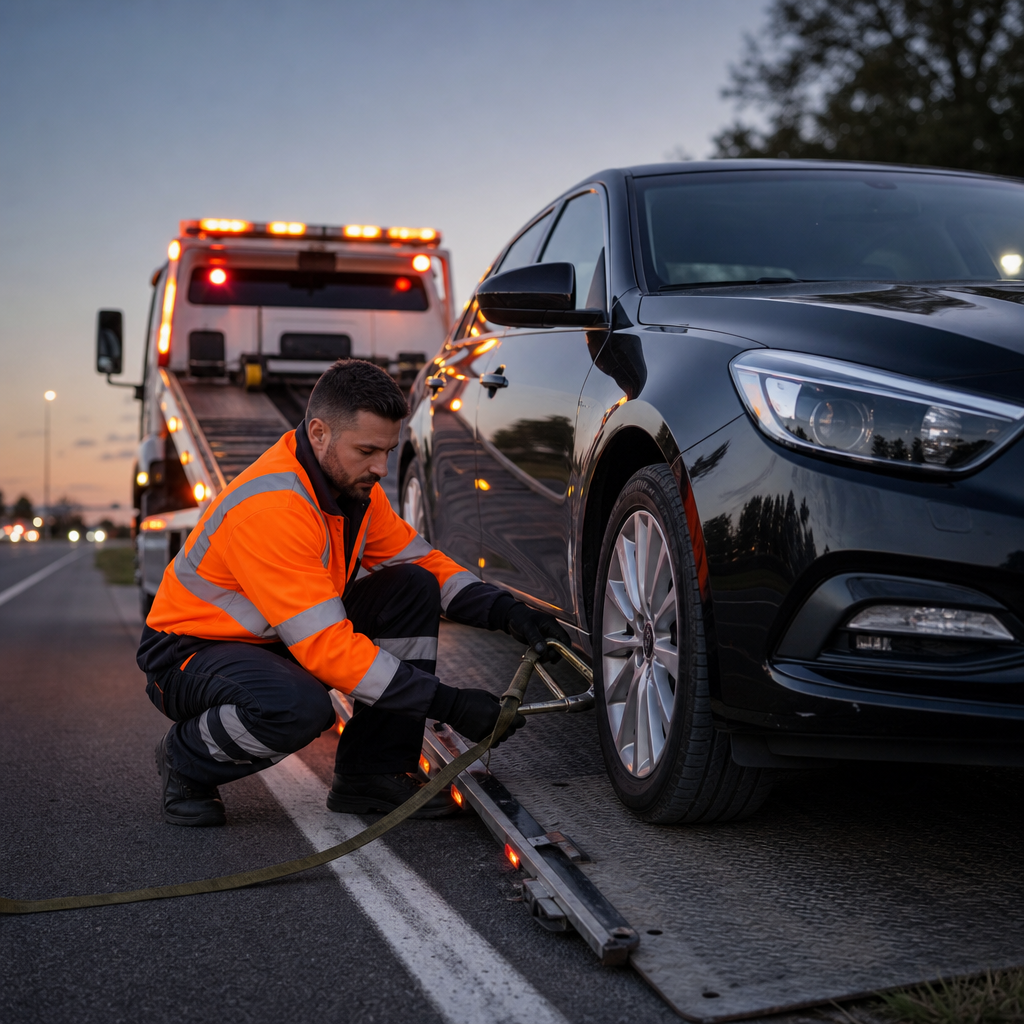
In these situations, a flatbed towing option">flatbed towing option can move the vehicle without asking you to drive it farther. Tell the dispatcher that the vehicle was exposed to floodwater and whether the engine was running, stalled, or has not been restarted.
Continue only after a conservative safety check
Continuing may be reasonable only if the vehicle never stalled, the water was clearly shallow, the engine is running normally, no warning indicators appear, braking and steering feel normal, and you can reach a safe place without entering more water. Do not continue through another flooded section to “see if it clears.” A vehicle that is still moving is not proof that it has avoided every problem.
If you are uncertain, treat uncertainty as the reason to stop. The inconvenience of a tow is usually easier to manage than an avoidable restart attempt in an unsafe roadside setting.
Roadside checklist: protect yourself first, then preserve useful details
- Get out of the active traffic area. If remaining in the vehicle exposes you to passing traffic or rising water, move to a safer spot only when you can do so without entering deeper water or crossing traffic lanes.
- Leave the engine off. Do not repeatedly use the ignition, remote start, or push-button start to test the vehicle.
- Make the vehicle visible if safe. Use hazard lights if they function. If you have reflective equipment that can be placed without standing in traffic, use it. Do not place yourself in a lane to deploy anything.
- Take a quick visual record from safety. Note the apparent water level, whether the vehicle stalled, whether water entered the cabin, and any dashboard warnings seen before shutdown. A few photos can help you describe the situation, but do not linger beside moving traffic for pictures.
- Do not open components to investigate. Avoid checking under the hood, disconnecting electrical parts, or attempting a roadside repair in rain or near standing water.
- Choose a safe destination. Have a home, repair facility, or other lawful destination in mind before the tow arrives. If you need help moving a non-running vehicle, request 24-hour towing service">24-hour towing service.
What a towing provider needs before dispatching
Clear information helps the provider prepare the appropriate service and helps you avoid having to explain the event while standing close to traffic. Share only what you know; guesses are less useful than a simple, accurate timeline.
- Your precise location in West Palm Beach, Florida, including the direction of travel or nearest safe identifying feature if available.
- The vehicle year, make, model, color, and whether it is accessible or blocked by water, a curb, or another obstacle.
- Whether the engine was running when it entered water, stalled in water, or has remained off since exposure.
- Whether the vehicle is in a lane, parking area, driveway, shoulder, or other position with traffic exposure.
- Whether the wheels roll freely and whether you have the keys.
- Your intended drop-off location and a callback number.
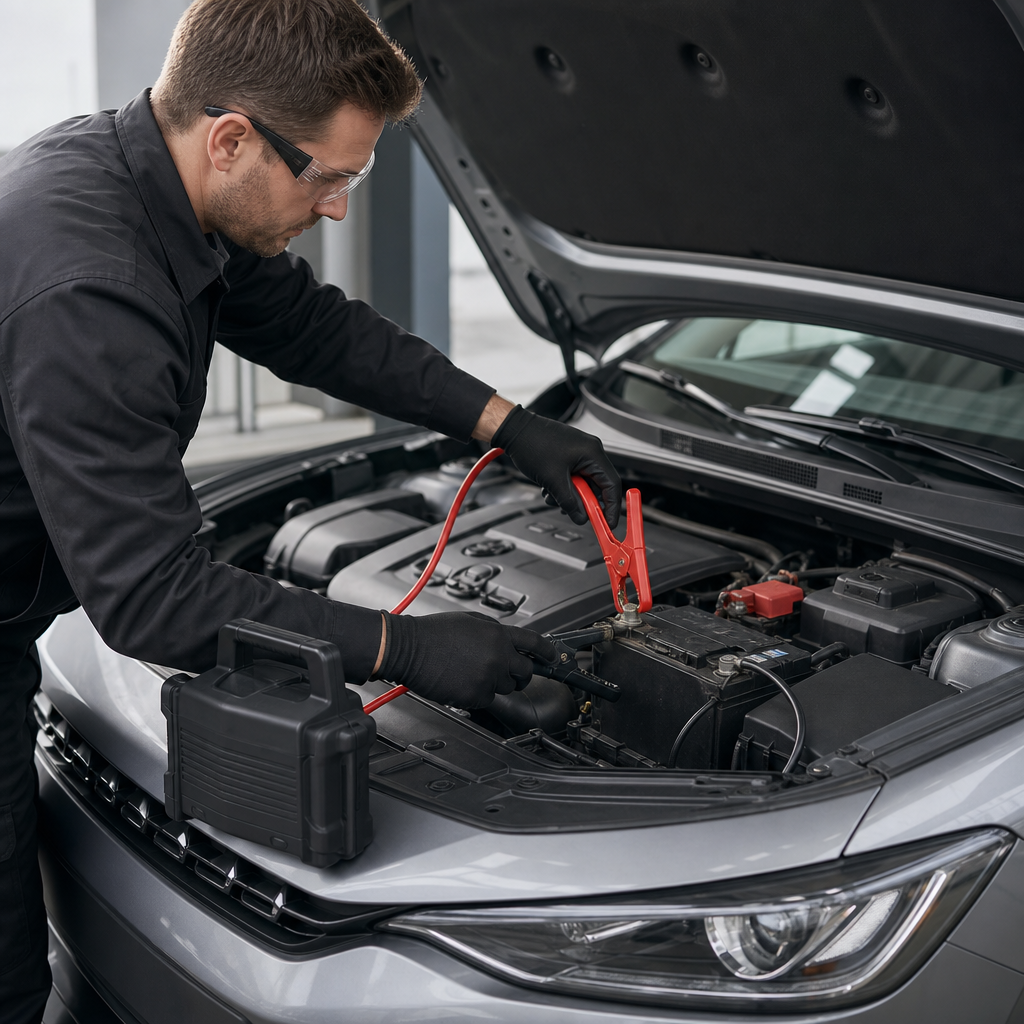
Ask for the service that matches the condition rather than requesting a jump start as a shortcut. A jump start addresses a weak or discharged battery; it does not establish that it is safe to restart a vehicle that stalled in floodwater. If the issue truly appears limited to a battery and there was no water-related stall, see jump start service information">jump start service information.
Service preparation while you wait
Once help is arranged, keep the handoff simple and safe. Stay reachable by phone, watch for changing water conditions, and keep passengers together in the safest available location. Gather essential belongings only if doing so does not put you near traffic or require wading into water. Keep the keys available, but do not leave them in an unattended vehicle if you have moved to safety.
When the tow operator arrives, explain the sequence in one sentence: for example, “The vehicle stalled while crossing standing water, and I have not tried to restart it.” Point out any visible water entry or access limitations. That information supports safer loading and a more appropriate next step for the vehicle.
Frequently asked questions
Can I restart my vehicle after it stalls in floodwater?
It is safer not to restart it. A stalled engine after water exposure is a strong reason to request towing and avoid repeated start attempts.
What if the water is gone and the vehicle looks normal?
Visible water disappearing does not confirm that the vehicle is ready to run. If it stalled, took on interior water, displayed warnings, or you are unsure how high the water reached, keep it off and arrange transport.
Should I call for a jump start if the vehicle will not start after driving through water?
Not as the first response to a floodwater stall. Describe the water exposure when calling. The issue may not be a battery, and attempting to start the vehicle can add damage.
What should I do if my car is stopped where other drivers may not see it?
Prioritize your position relative to traffic. Use hazards if available, move to a safer location when possible without crossing danger, and request towing with the vehicle’s exact roadside position.
Need help now? Contact a towing provider with your West Palm Beach location, the water exposure details, and whether the engine has been restarted. That gives the dispatcher the information needed to send appropriate roadside or towing assistance without requiring you to troubleshoot in an unsafe place.